Native Florida Landscape Design for Naples Estates
The highest-performance choice for estates that need to maintain themselves beautifully without intensive management — and the only design language where the plant palette was already here before the estate was built.
By Thomas Gow · 8 min read · Precision Landscaping & Design
The Quick Answer
The performance case: Native species evolved for Zone 10B's conditions — salt air, high humidity, seasonal drought, hurricane load. They require no spray programs, minimal irrigation after establishment, and no seasonal treatment. The estate maintains itself.
Irrigation approach: Drip only. Smart controllers with soil moisture sensors. No overhead spray program. Once established, native estates often run irrigation only during SWFL's dry season (November–May).
Best suited for: Seasonal residents and second-home buyers. Sanibel and coastal properties with native planting requirements. Buyers who prioritize ecological authenticity and low ongoing management cost.
The Design Language That Belongs Here More Than Any Other
Every other outdoor design language on a Naples estate is an imposition — a beautiful and appropriate imposition, but a choice to bring a design vocabulary to a place where it is not native. Mediterranean design brings European materials and plant vocabulary to SWFL and finds that the climate accommodates them. Tropical Resort brings Balinese plant species and finds that Zone 10B supports them authentically. Modern design brings architectural design principles and resolves the heat management challenge.
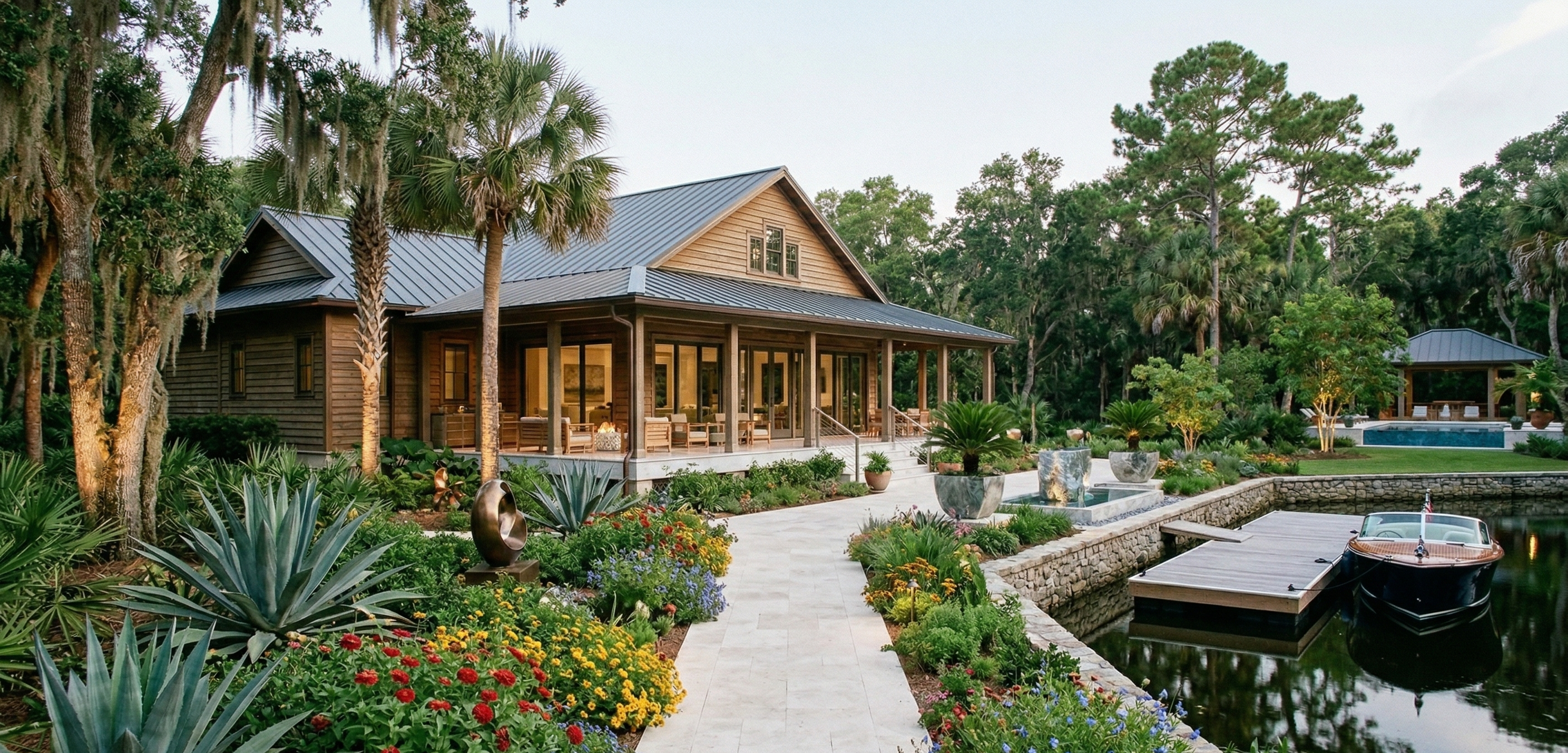
Native Florida landscape design is not an imposition. It is a recognition of what was already here. The Sabal Palmetto groves that characterized this coastal landscape before development. The Sea Grape thickets at the tideline. The Gumbo Limbo trees along the hammock edges. The Coontie colonies in the understory. A native estate is designed in collaboration with the landscape rather than against it — and the result is an outdoor environment that reads as if it has always been here, because the plants have.
This is also the most practical design choice for a significant portion of Naples buyers: seasonal residents and second-home owners who need their estate to perform beautifully without active management for months at a time.
Native plants, once established, are the answer to that requirement. They do not need the spray programs, the weekly trimming, and the regular intervention that non-native estate planting requires.
The Native Estate Plant Palette for Naples Properties
Sabal Palmetto — The Estate Canopy Palm
The Florida state palm. At 30–40 feet at maturity, with a single trunk and informally arching crown, the Sabal Palmetto is the correct large-scale vertical element for a native estate. It is more hurricane-resistant than any non-native palm species — its trunk flexes rather than snaps in high wind, and its crown drops its fronds before the trunk fails. It requires no irrigation after the first year and tolerates full salt exposure, drought, and periodic flooding without lasting damage. In native estate design, Sabal Palmettos in informal groupings of three to five provide the canopy layer that defines the estate's scale.
Gumbo Limbo — The Sculptural Tree
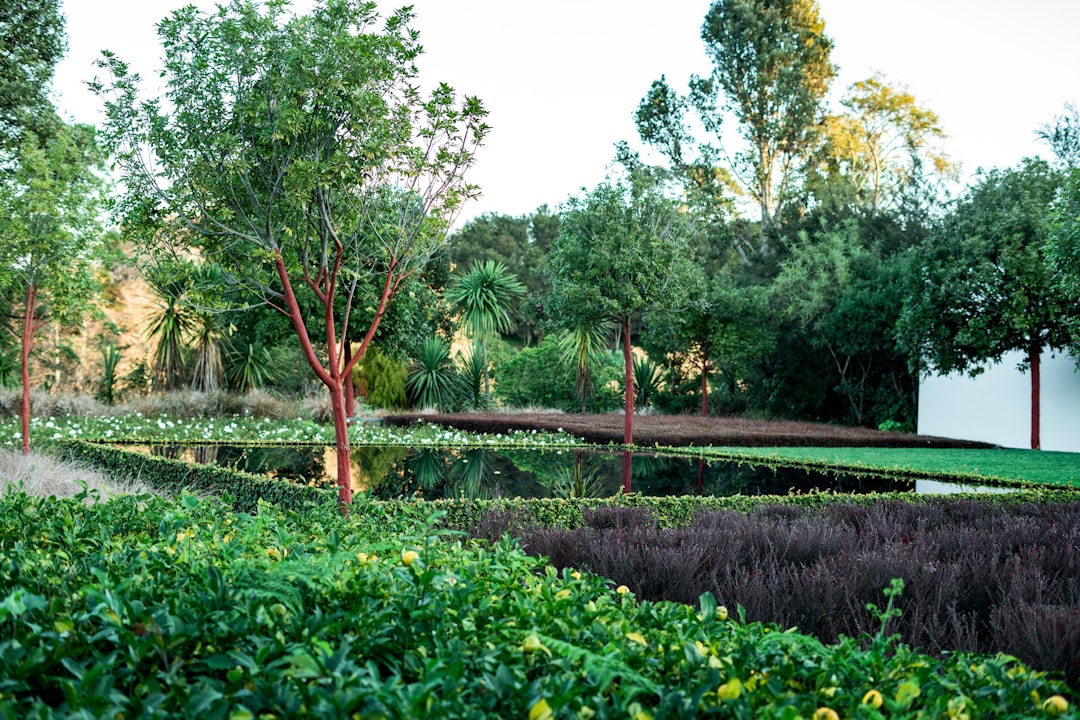
The Gumbo Limbo (Bursera simaruba) — locally called the "tourist tree" for its peeling red bark — is the most visually compelling native tree available in SWFL. Its sculptural multi-branching form, smooth coppery-red bark that peels in long strips, and semi-deciduous winter appearance produce a specimen that reads as intentionally beautiful. At estate scale, a single large Gumbo Limbo positioned as a focal specimen creates more visual impact than any non-native tree available in Zone 10B. It roots easily from large cuttings, tolerates drought and salt air, and requires virtually no maintenance after establishment.
Sea Grape — The Coastal Privacy Plant
Sea Grape (Coccoloba uvifera) is the finest privacy and screening plant for Naples coastal properties. Its broad, waxy, round leaves resist salt spray without burning, and its multi-trunk tree form reaches 20–25 feet with a dense canopy that provides visual screening without the formality of a clipped hedge. The reddish new growth — bright red when the leaf first unfurls, deepening to green as it matures — provides seasonal color without flowers. The seasonal fruit clusters (small purple grapes) attract birds and provide informal seasonal interest. Sea Grape grows on coastal properties in conditions where most non-native privacy plants fail.
The Supporting Cast
Coontie (Zamia pumila): The only cycad native to North America. Low-growing, slow, and nearly indestructible. Host plant for the Atala butterfly. Appropriate as a ground-level accent at base of specimen trees and along path edges.
Cocoplum (Chrysobalanus icaco): Dense rounded native shrub for privacy hedging without a spray program. Resists the scale insects and fungal issues that plague non-native hedging in SWFL.
Muhly Grass (Muhlenbergia capillaris): Fine-texture mass planting for border and pool edge compositions. Pink-purple fall plume display that no non-native grass achieves in this climate. Drought-tolerant once established.
Simpson Stopper (Myrcianthes fragrans): Small native tree (15–20 feet) with fragrant white flowers and orange-red fruit. Excellent as a multi-trunk specimen or informal screen. Tolerates full sun and salt air.
"The strongest argument for native planting on a seasonal estate is not philosophical — it is operational. The owner who leaves in May and returns in November needs their estate to be exactly as they left it. With a native planting plan, drip irrigation, and smart controls, that is achievable. With a non-native planting plan that requires a spray program and weekly trimming to maintain, the owner returns to an estate that has drifted in their absence. Native planting is the design choice that makes the estate manageable."
The estate-grade native Florida palette for Naples: Sabal Palmetto (state palm, 30–40 ft, hurricane-resistant canopy); Sea Grape (best coastal privacy plant, broad waxy leaves, salt-tolerant); Gumbo Limbo (sculptural multi-trunk tree, peeling red bark, exceptional drought tolerance); Coontie (native cycad ground accent, Atala butterfly host); Cocoplum (dense native hedge, no spray program required); Muhly Grass (fine texture, pink fall plume); Simpson Stopper (native tree, fragrant white flowers, orange fruit).
Yes — native Florida landscape design is the lowest-maintenance outdoor design choice for Naples estates. Once established (12–18 months), native species reach drought tolerance and require minimal irrigation. They don't need the spray programs that non-native species require in SWFL's conditions. The estate maintains itself — which is the primary requirement for seasonal residents and second-home owners.
Yes. The Gumbo Limbo's sculptural form is more visually compelling than any non-native tree in Zone 10B. Sea Grape's broad glossy leaves and seasonal fruit read as genuinely beautiful. Muhly Grass in fall bloom produces a pink drift effect that no non-native grass replicates. Native landscape design on a Naples estate is not a lesser choice — it is a choice that places the estate in its landscape rather than imposing a different landscape on the property.
Native estate design uses drip irrigation only — no overhead spray programs. Drip delivers water directly to the root zone, minimizing fungal disease pressure and using significantly less water than conventional irrigation. Smart controllers with soil moisture sensors run only when the soil requires it and can be managed remotely — critical for seasonal residents managing a Naples property from out of state.
Designing a Native Estate in Naples?
We design and build native Florida outdoor estates — Sabal Palmetto canopy, Sea Grape privacy, Gumbo Limbo specimen trees, Cocoplum hedging, and drip irrigation with smart controls. An estate that maintains itself beautifully in your absence. Precision Landscaping & Design · FL CGC1539932 — permits through Collier County.