
DESIGN LANGUAGES · PRECISION LANDSCAPING & DESIGN

Formal Landscape Design
for Naples Estates

The highest-discipline outdoor design language — bilateral symmetry, axes and vistas, clipped parterres, and formal allées — and how it translates authentically to SWFL without the European species that fail here.

By Thomas Ferrara · 9 min read · Precision Landscaping & Design

The Quick Answer

The Most Disciplined Outdoor Design Language — and Why It Belongs in Naples

Formal landscape design is organized by one principle applied without exception: bilateral symmetry from a central axis. Every element — planting, fountain, urn, path, parterre bed — is paired and mirrored on either side of the primary axis that runs from the home's principal viewpoint to the garden's focal terminus. Nothing breaks symmetry. Nothing is placed organically. The design is complete when it reads as if the landscape was created by mathematical intention rather than artistic preference.

In Grey Oaks, Port Royal, and Pelican Bay, where Mediterranean Revival and classical architecture produces homes with formal entry sequences, symmetrical facade compositions, and principal rooms overlooking large garden zones, formal landscape design is the most natural outdoor vocabulary. The architecture itself is asking for an outdoor environment organized by the same compositional principles that organized the building.

Formal design is also the most demanding of all outdoor design languages to execute — and to maintain. In SWFL's growing season, which runs essentially year-round, clipped parterres and formal hedging require precision trimming every 4–6 weeks to maintain geometric discipline. This is a design language appropriate for owners who intend to maintain a landscape management service — not for seasonal residents or second-home buyers seeking a low-maintenance outdoor environment.
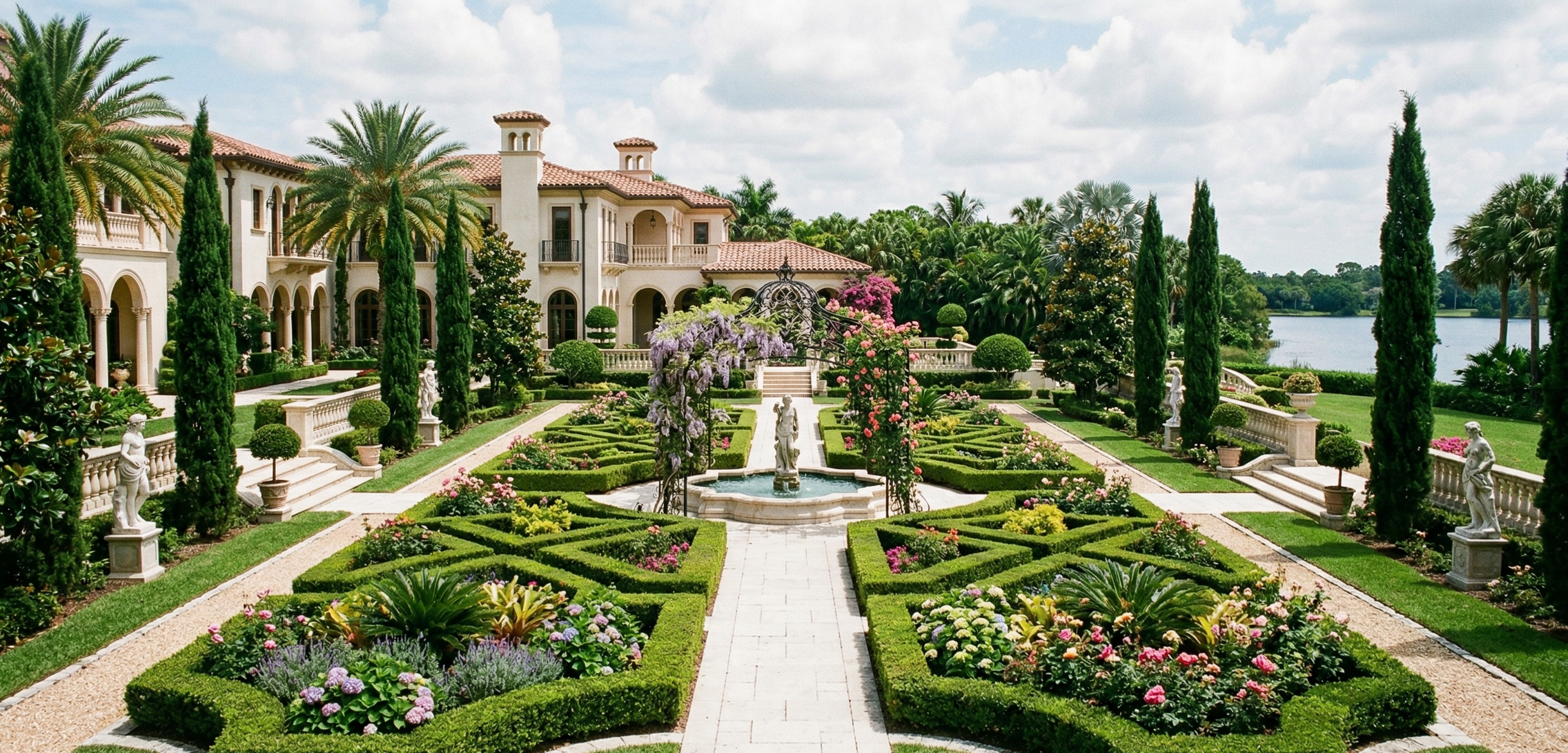
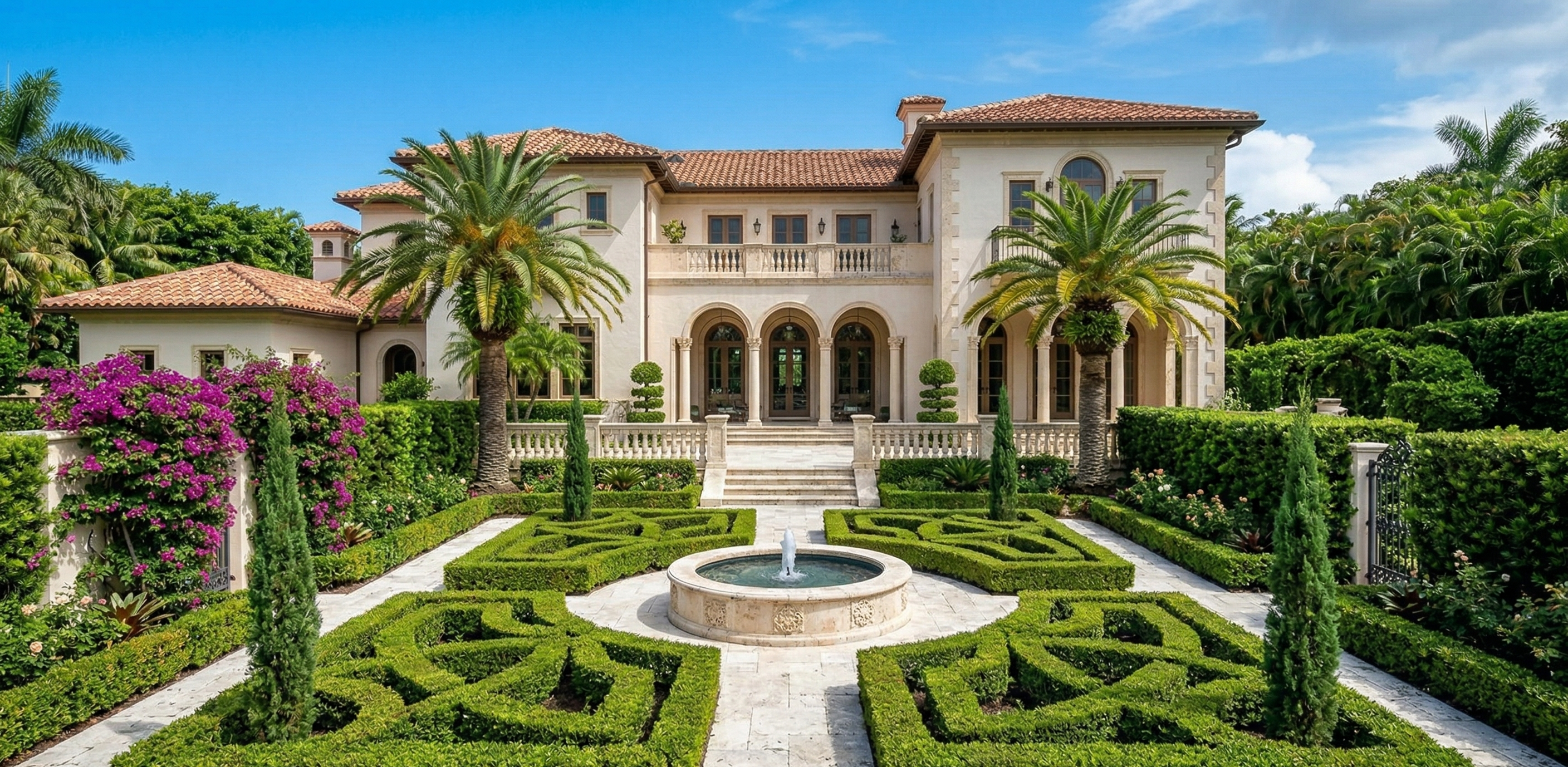
Formal estate garden with bilateral symmetry, clipped hedges, and stone pathway
Design language reference: formal estate garden — Unsplash

The Defining Elements of Formal Landscape Design

The Central Axis and Symmetrical Plan

The central axis is the organizing spine of a formal garden — an invisible line running from the home's principal viewpoint (typically a set of French doors or a terrace edge) to the garden's terminal focal point (fountain, urn, sculpture, or allée terminus). Everything is arranged in bilateral symmetry around this axis. The path layout, parterre beds, hedge borders, specimen trees, and focal points are all positioned as mirror images of each other on either side. Any departure from symmetry is visible immediately in a formal design — and reads as an error, not a choice.

Parterres and Clipped Hedging

The parterre is the ground-plane geometry of formal landscape design — a pattern of low clipped hedges, typically 12–18 inches in height, defining geometric beds filled with a consistent planting or gravel. In European formal gardens, Box hedging (Buxus sempervirens) is the universal parterre plant. In SWFL, Box fails — it is vulnerable to both heat and the fungal diseases that SWFL's humidity promotes. The correct SWFL substitution is Viburnum odoratissimum, which can be maintained at low heights with shearing and tolerates Zone 10B conditions reliably. For taller formal hedge lines (3–6 feet), Podocarpus macrophyllus is the superior substitution — it maintains precise geometric shearing and grows in Zone 10B without the cold sensitivity issues that affect Italian Cypress in extreme years.

Formal Allées

A formal allée — a double row of matching trees flanking a central path — is the most commanding statement available in estate landscape design. In European estates, allées use Linden, Hornbeam, or Plane trees trained in pleached forms. In SWFL, the correct allée trees are Live Oaks (Quercus virginiana) — they develop into the correct canopy form at estate scale and provide the archway-over-path effect that defines a formal allée. Royal Palms (Roystonea regia) provide a more upright, formal allée character appropriate for a shorter approach path. Canary Island Date Palms in a formal row produce the gateway effect at an entry without the allée's overhead canopy.

Formal Water Features

Formal water features — stone basins with central jets, reflecting pools aligned to the primary axis, rill channels running along the central path — are positioned at axis intersections and at the terminal focal point of the garden's primary axis. In SWFL, formal water features require proper pump sizing, recirculating system design, and material selection appropriate for continuous outdoor operation in high UV conditions. Travertine-clad basins and cast stone fountain bases are appropriate material choices.

Formal parterre garden with clipped hedges and stone fountain at axis intersection
Design language reference: formal estate parterre — Unsplash

SWFL Plant Substitutions for Formal Design

Formal landscape design has a long tradition of very specific plant species that achieve the precise geometric forms the style requires. Most European formal garden species do not perform reliably in SWFL. The following substitutions maintain the formal vocabulary without compromising horticultural performance in Zone 10B.

"Formal design is the one style where I ask every client the same question before we start: do you have a landscape management service, or are you planning to get one? Because formal design without ongoing precision maintenance doesn't degrade gracefully — it just looks wrong. The hedge line that hasn't been trimmed in six weeks is not a casual formal garden. It is a formal garden that has been abandoned. If the management piece isn't in place, I recommend a different design language."

— Thomas Ferrara · Precision Landscaping & Design

Frequently Asked Questions

Formal landscape design is organized by bilateral symmetry radiating from a central axis. Every element is paired and mirrored — planting, urns, fountains, paths. The design is intended to be seen from an elevated principal viewpoint (the home's primary rooms). Formal gardens use controlled planting — topiary, parterres, and clipped hedges in geometric shapes — rather than organic forms.
Yes — with appropriate SWFL plant substitutions. Box hedging (Buxus) fails in SWFL heat. The correct substitutions: Podocarpus macrophyllus for columnar formal screening, Viburnum odoratissimum for formal parterre hedging at lower heights, Live Oak for formal allée plantings, Cycas revoluta for symmetrical accent positions. The formal vocabulary is fully achievable — just not with European species.
Formal landscape design is the most maintenance-intensive outdoor design language. Clipped parterres require trimming every 4–6 weeks during SWFL's growing season (essentially year-round). Topiary requires precision hand-trimming on a similar cadence. Formal design is appropriate for primary residences with dedicated landscape management — not for second homes or low-maintenance estate programs.
Formal landscape design is most appropriate in Grey Oaks, Port Royal, and Pelican Bay — where Mediterranean Revival and classical architecture creates a natural framework for formal outdoor vocabulary. The design standard in these neighborhoods and the scale of the homes support formal design appropriately. It is the design language that most directly signals the highest-value property profile.

Designing a Formal Estate in Naples?

We design and build formal outdoor estates — parterres, allées, clipped hedging, stone water features, and axial garden compositions — in Grey Oaks, Port Royal, and Pelican Bay. Precision Landscaping & Design · FL CGC1539932.

Or read: Landscape Architect Services · Hardscape & Pavers · Design Languages Guide