SITE WORK + GRADING
Naples Site Work.
Before the Finish.
The invisible work that protects your travertine, pool deck, and outdoor kitchen — engineered for SWFL water and fill.
FINISH PROTECTION
Invisible Work That Protects
What You'll See Every Day.
- Pool Terrace Level grade and compacted base set before shell excavation — so travertine and coping don't settle after the first wet season.
- Outdoor Kitchen Footprint Dry, stable pad with drainage away from the slab — gas rough-in and countertop weight land on engineered fill, not disturbed topsoil.
- Arrival Grading Motor court and entry sequence graded for runoff — shell stone and porcelain driveways hold because the base was prepared for the surface spec.
WHO STARTS HERE
Site Prep Before
the Visible Finishes.
New Construction
Your builder finished inside; the exterior is still raw. Site work establishes grades, drainage, and base layers before pool, hardscape, or kitchen contractors arrive — one team protects every finish that follows.
Already Have a Design?
A landscape architecture plan defines what goes where — site work executes the grades and drainage that plan requires. Start with estate design or bring an existing plan for site preparation.
Ready for Full Build?
Site work is Act 2 of a full outdoor estate — grading and drainage under the same contract as pool, hardscape, and kitchen. See full estate build.
LAND GRADING SERVICES
Land Grading Contractor in Naples, FL
Rough grading establishes drainage direction and building pad elevation before any finish trade arrives. Fine grading sets catch basin locations, French drain runs, and swale lines to within spec. Finish grading is the final pass before sod, planting, or hardscape — the last chance to protect travertine, pool coping, and outdoor kitchen slabs from SWFL's wet season.
On Collier County estate builds, grading is not a line item — it is the foundation every visible layer depends on. We execute rough, fine, and finish grade under one contract, engineered for the high water table and flat topography that define Naples site conditions.
- Rough GradePrimary elevations cut and filled — building pad height set, drainage fall established, import fill placed where the water table requires raised finish floor.
- Fine GradeSurvey-accurate grades to spec — catch basins, French drains, and swales staked and trenched before underground work locks the field.
- Finish GradeFinal surface before sod, planting, or hardscape — positive drainage away from pool terrace, kitchen pad, and motor court footprints.
SWFL flat topography — grading and drainage are one scope. See grading cost ranges for pre-construction pricing context.
SCHEDULE YOUR ESTATE BUILD CONSULTATIONCONSTRUCTION PROOF · EAST NAPLES
Clearing, grade, and retention as one system.
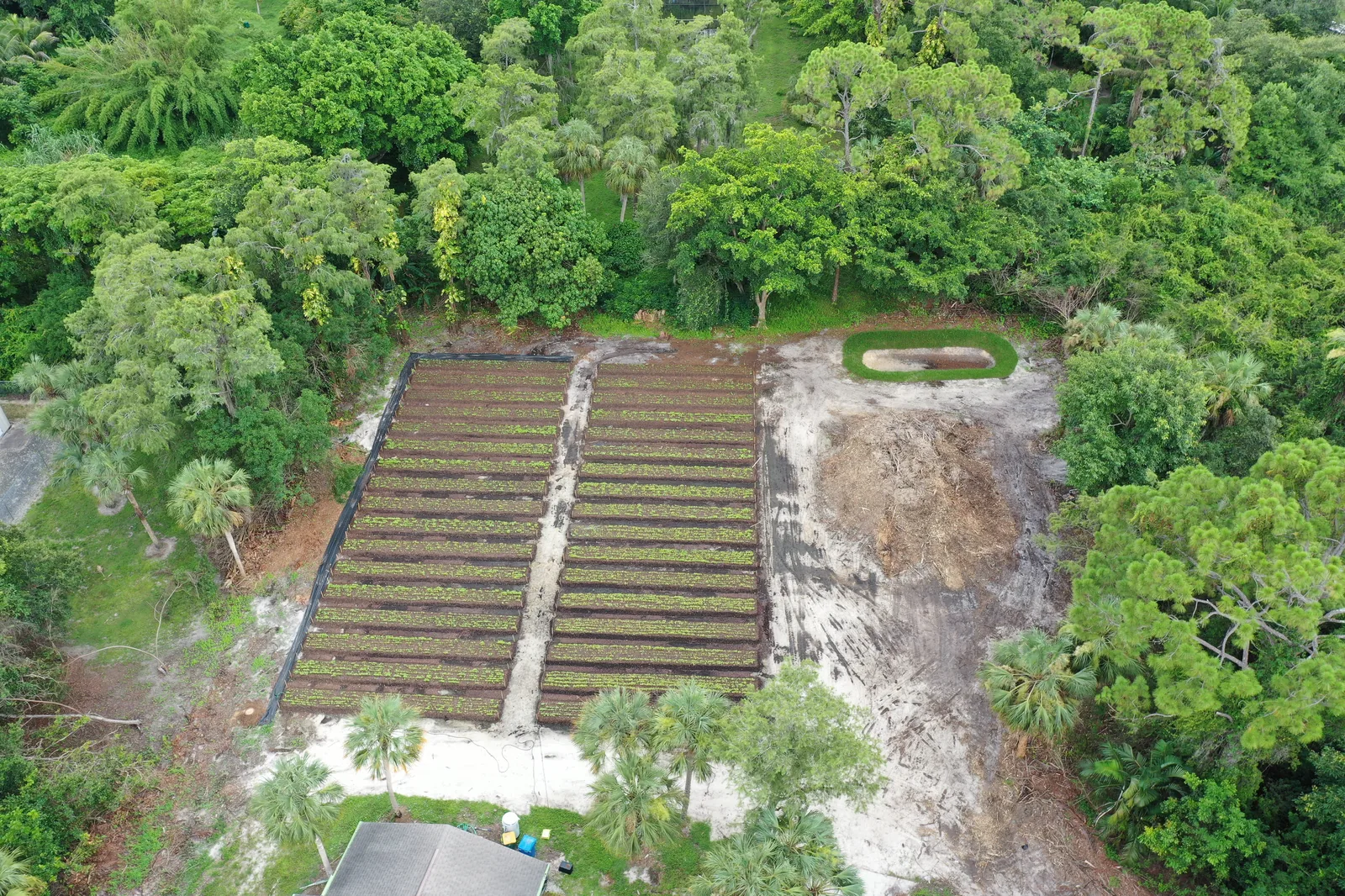
East Naples / Collier County
Lot clearing and land grading — site conversion
ROW opened, sand pad graded, retention cut, production beds laid. One contract from clear through working ground.
See the East Naples site conversion →Travertine, pool coping, and outdoor kitchen slabs fail when the grade and base beneath them were never engineered for SWFL water and fill. The finishes look perfect on day one — then settle, crack, or flood after the first rainy season because site work was treated as a line item, not the foundation every visible layer depends on.
Precision handles site work as Act 2 of every estate build — or as a standalone engagement when you need grades and drainage resolved before any finish trade arrives. One team protects what gets built on top.
"Site work done wrong is invisible until it fails. Then everything above it fails with it."
UNDERGROUND REQUIREMENTS
What Each Finish
Requires Beneath It.
Site work is not generic earthmoving — each visible layer on an estate build has a specific grade, base, and drainage requirement. This is what we engineer before travertine, pool shell, or kitchen slab work begins.
Full sequencing and finish-specific prep: site work prep guide. Material and base depth tie to hardscape base specifications and estate drainage design — resolved in the landscape architecture phase, executed in site work.
ACT 2 IN THE FUNNEL
Design → Site Work → Finishes.
One Contract.
Landscape Architecture
Pool terrace, kitchen zone, arrival, and drainage drawn in plan — elevations and materials specified before grade is set.
Start with estate design →Site Work + Grading
Grades, drainage, and base layers executed to the design — the invisible work that protects every finish above.
Full Estate Build
Pool, hardscape, kitchen, lighting — installed on engineered ground, not corrected through finished stone.
See full estate build →SEQUENCING
Three Mistakes That Destroy
Finishes Before They're Installed.
Grade Set Before Design Is Locked
Pool terrace elevation, kitchen footprint, and arrival sequence belong in the landscape architecture plan — not improvised during earthwork. Grading to convenience forces travertine, coping, and slab trades to adapt to whatever happened to be convenient.
Pool Shell Before Perimeter Drainage
Deck base and French drains must be specified before shell excavation on high water-table lots in Pelican Bay, Grey Oaks, and lakefront Collier County properties. Shell-first sequencing guarantees deck corrections through finished stone.
Hardscape Before Utility Trenches
Gas, electrical, and irrigation routes for outdoor kitchens and lighting scenes must be trenched before pavers lock the field. Cutting trenches through finished travertine is the most expensive correction on fragmented builds.
Full build sequencing mistakes guide → · Travertine surface selection →
WHAT WE DO
Grading & Drainage —
Engineering Below the Finishes
Land Clearing + Demolition
Existing hardscape removal, vegetation clearing, and debris disposal — site cleared and documented before any new work begins. Proper disposal of concrete, asphalt, and organic material in compliance with Collier County requirements.
Rough Grading + Earthwork
Establishing grades that direct water away from structures and toward drainage infrastructure. In SWFL's flat topography, rough grading requires precision — every inch of elevation matters when there's nowhere natural for water to go.
Drainage Systems
French drains, catch basins, swales, and trench drains designed for SWFL's flat topography and seasonal rainfall. Drainage is not cosmetic here — it's structural. Every drainage plan is designed for the specific site, not templated from another property.
Soil Stabilization + Base Preparation
Compaction, fill, and base preparation for pavers, pool decks, motor courts, and driveways. Base failure is the primary cause of paver settlement in SWFL. We prepare the base to the spec the surface requires — not the minimum the schedule allows.
Fine Grading + Finish
Final grades set before sod, planting, or hardscape installation. Finish grading determines whether the installed environment holds water or drains it — the last step before the surface trades begin, and one of the most consequential.
Permit Coordination
Earthwork permits and drainage permits where required by Collier County and Lee County. We pull what's required, document what's completed, and coordinate with other trades so permits don't block the schedule.
Retaining Walls
Structural retaining wall design and installation — keystone block, concrete, and natural stone options for SWFL's high water table conditions. Every wall includes drainage behind it: perforated pipe and filter fabric are standard on every Precision retaining wall. Collier County requires permits for walls over 24 inches. We handle the permit as part of the build.
Need site work before your outdoor build?
Schedule Your Estate Build Consultation →SWFL ENGINEERING DEPTH
Flat Ground. High Water Table.
Rainy Season.
Drainage Is Structural, Not Cosmetic
SWFL's flat topography means there's no natural slope to rely on. Every site requires an engineered drainage plan — not a standard spec from another climate. Water that doesn't drain properly doesn't just puddle. It undermines pavers, erodes sod beds, and saturates pool decks from below.
High Water Table
Pool design, foundation prep, and underground utility work all require understanding the water table on the specific site. In Pelican Bay, Grey Oaks, and lakefront Collier County neighborhoods, the water table often sits within 2–4 feet of grade. Site work done without accounting for this leads to pool pop-up, flooded French drains, and compromised base layers.
Rainy Season Timing
SWFL's June–September wet season affects every construction schedule. Site prep and drainage must be complete and functional before rainy season hits an active build. We plan site work phases around the seasonal calendar — not just the trade sequence.
ESTATE DRAINAGE · SWFL ENGINEERING
Estate Drainage Solutions
in Naples, FL
Poor drainage is the most common failure point on SWFL estate builds. In Collier County, heavy rainfall events — 10–12 inches in a single afternoon — are a design parameter, not an exception. Properties that weren't graded correctly will have water pooling within the first wet season.
What we design and install:
- French Drains Perforated pipe in gravel-filled trench; redirects groundwater from foundation perimeter, pool equipment, and hardscape.
- Surface Drainage Channels Precast concrete or cast-in-place; integrated with pavers during the hardscape design phase — not cut in after.
- Swales & Berms On larger lots, engineered grade changes that direct flow to retention areas or street drainage.
- Catch Basins At low points in driveway aprons and hardscape field to capture and redirect surface water.
- Downspout Integration Roof drainage connected to underground drainage network — eliminates erosion at foundation corners.
The critical design note: drainage must be specified before hardscape is installed. Cutting drainage channels through finished travertine or shell stone is the most expensive correction we see on fragmented builds. We design it in. Full SWFL estate drainage systems guide →
RETAINING WALLS · NAPLES + COLLIER COUNTY
Retaining Wall Contractor
Naples, FL
When Retaining Walls Are Required on Estate Builds
Retaining walls become necessary on Naples estate properties where grade changes require holding soil at different elevations — at entry features, pool surrounds with level transitions, lakefront lots with shoreline elevation changes, and properties where fill was added to raise finished floor elevation. As a licensed retaining wall contractor in Naples, Precision designs and builds walls in keystone block, poured concrete, and natural stone. Material selection is driven by load requirements, drainage conditions, and the visual context of the overall estate design.
Drainage Behind Every Wall — Non-Negotiable
Every retaining wall in SWFL must account for hydrostatic pressure. Collier County's high water table and wet season rainfall create significant pressure behind walls built without proper drainage. The failure mode is predictable: walls without drainage behind them develop hydrostatic pressure that causes outward movement and eventual collapse within 3–5 years. Our standard on every structural retaining wall: perforated drainage pipe with gravel surround and filter fabric behind the wall, regardless of height. This is structural, not optional.
Permits + One-Contract Delivery
In Collier County, retaining walls over 24 inches require a building permit. Walls over 48 inches typically require a structural engineer's drawing. For stone retaining wall Collier County projects near property lines or drainage easements, setback requirements apply and must be confirmed before design is finalized. Precision handles all permit applications as part of the build — the wall, the drainage behind it, and the permit are all under one contract. No separate structural contractor to manage. No permit delays because a sub didn't pull paperwork on time.
COMMON QUESTIONS
Site Work & Grading
in Naples.
Site work scope on Naples estate builds is priced after site assessment — lot size, soil conditions, and drainage complexity drive the total. Full pre-construction packages on standard Collier County estate lots typically run $25,000–$60,000 before pool, hardscape, or outdoor kitchen trades begin. Waterfront and high water-table properties require additional engineering. Full site work cost guide →
Permit requirements depend on scope. Clearing native vegetation requires a Collier County Vegetation Removal Permit (VRP) — typically one acre per residential application. On new construction parcels, clearing cannot precede building permit issuance. Drainage work that ties into county stormwater systems or disturbs wetland buffers may require an Environmental Resource Permit from SFWMD. Retaining walls over 24 inches require a building permit. On most estate-scale residential builds in established Naples neighborhoods, site work permits are handled as part of the overall building permit package. Precision coordinates all permit applications and agency submissions.
SWFL's flat topography means there is no natural slope to carry water away — every site requires an engineered drainage plan. Collier County receives 55–65 inches of rainfall annually, concentrated June through September. A single afternoon storm can deposit 6–12 inches in hours. Without proper drainage, water undermines paver bases, saturates pool deck substrates from below, and floods outdoor living areas. The high water table in much of Naples — often 2–4 feet below grade — compounds the problem.
Before pool excavation: existing hardscape and vegetation cleared, rough grade established, utility locations verified. Pool shell depth is determined by the water table on the specific site — assessed before permit application. Before hardscape: drainage infrastructure complete, base material in place and compacted. Installing pavers before drainage is designed is the most common mistake on fragmented builds. Full site work prep guide →
Yes — retaining walls over 24 inches require a building permit in Collier County. Walls over 48 inches typically require a structural engineer's drawing. Walls adjacent to property lines or drainage easements have setback requirements confirmed before design is finalized. Every structural wall includes drainage behind it — perforated pipe and filter fabric are standard. Precision handles permit applications and drainage design as part of the build.
Design first, then grade to the plan. Landscape architecture resolves where the pool terrace, kitchen footprint, and motor court sit — site work executes the grades, drainage, and base depths that plan requires. Grading before design forces finish trades to adapt to whatever grade happened to be convenient. Grading after design protects travertine, coping, and outdoor kitchen slabs because every elevation ties to a specified finish.
The visible finishes fail invisibly. Pool decks settle when base compaction was skipped or drainage saturates the substrate from below. Outdoor kitchen slabs crack when pads were poured on disturbed fill without runoff engineered away from the footprint. Motor courts pond when arrival grading did not account for Collier County wet-season volume. The correction always costs more than designing site work before the first finish trade arrives.
GET STARTED
Schedule Your Estate
Build Consultation.
Prefer to talk? Call. A sentence in the form is enough.
Whether you need site work as part of a full estate build or as a standalone engagement to prepare a property for other trades, Thomas reviews every inquiry personally. Prefer to talk — call.
(239) 300-8636