DESIGN LANGUAGES · PRECISION LANDSCAPING & DESIGN

The Coastal Estate:
Outdoor Design for Waterfront Naples

Waterfront properties in Naples have one design constraint every other property type does not: the view is the feature. Every design decision exists to frame it — not compete with it.

By Thomas Ferrara · 10 min read · Precision Landscaping & Design

The Quick Answer

When the View Is the Feature, the Design Exists to Frame It

Waterfront properties in Naples have a design problem that every other property type does not: the most valuable asset on the property is the view, and the outdoor design can either enhance it or work against it. Every outdoor element — the pool deck height, the pergola structure, the hedge species, the planting density — either opens a sightline to the water or closes one. There is no neutral choice on a waterfront property.

The correct design response to a waterfront estate is restraint. Clean horizontal lines rather than vertical structure. Open pergola frames rather than solid-roof pavilions that block sky. Low-growing native coastal species at the waterline rather than tall hedging that creates a wall between the estate and the water. Porcelain or light stone hardscape that reflects sky and light toward the estate rather than dark pavers that absorb it. The goal is for the outdoor estate to disappear into the view — to function as the frame, not the painting.

This is also a technical discipline. Coastal zone design in SWFL — particularly in Port Royal, Aqualane Shores, and the Pelican Bay and Marco Island waterfront zones — requires materials and construction methods that perform in salt air, high humidity, and storm conditions. The aesthetic of coastal restraint and the engineering requirements of coastal durability align: both point toward the same material and plant palette.
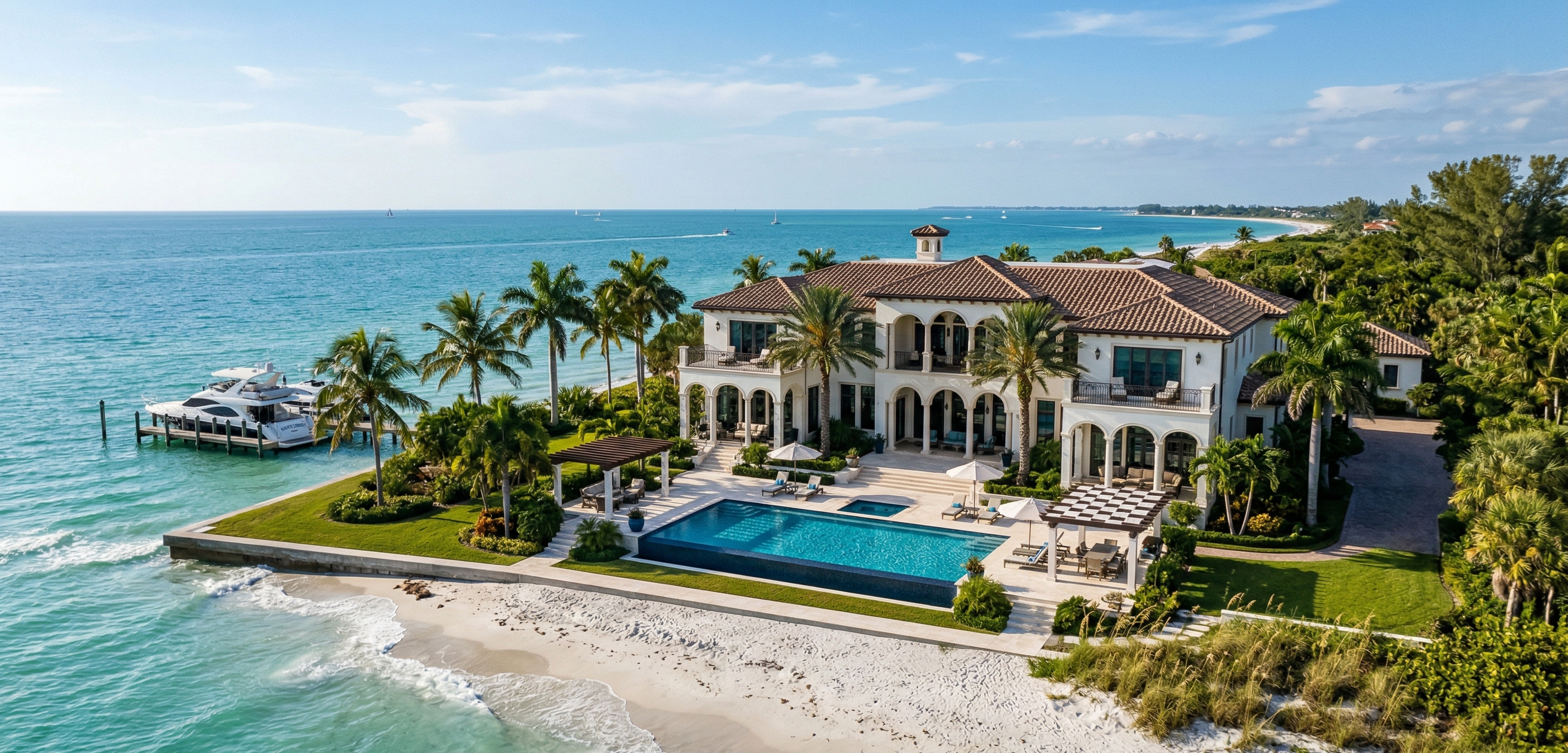
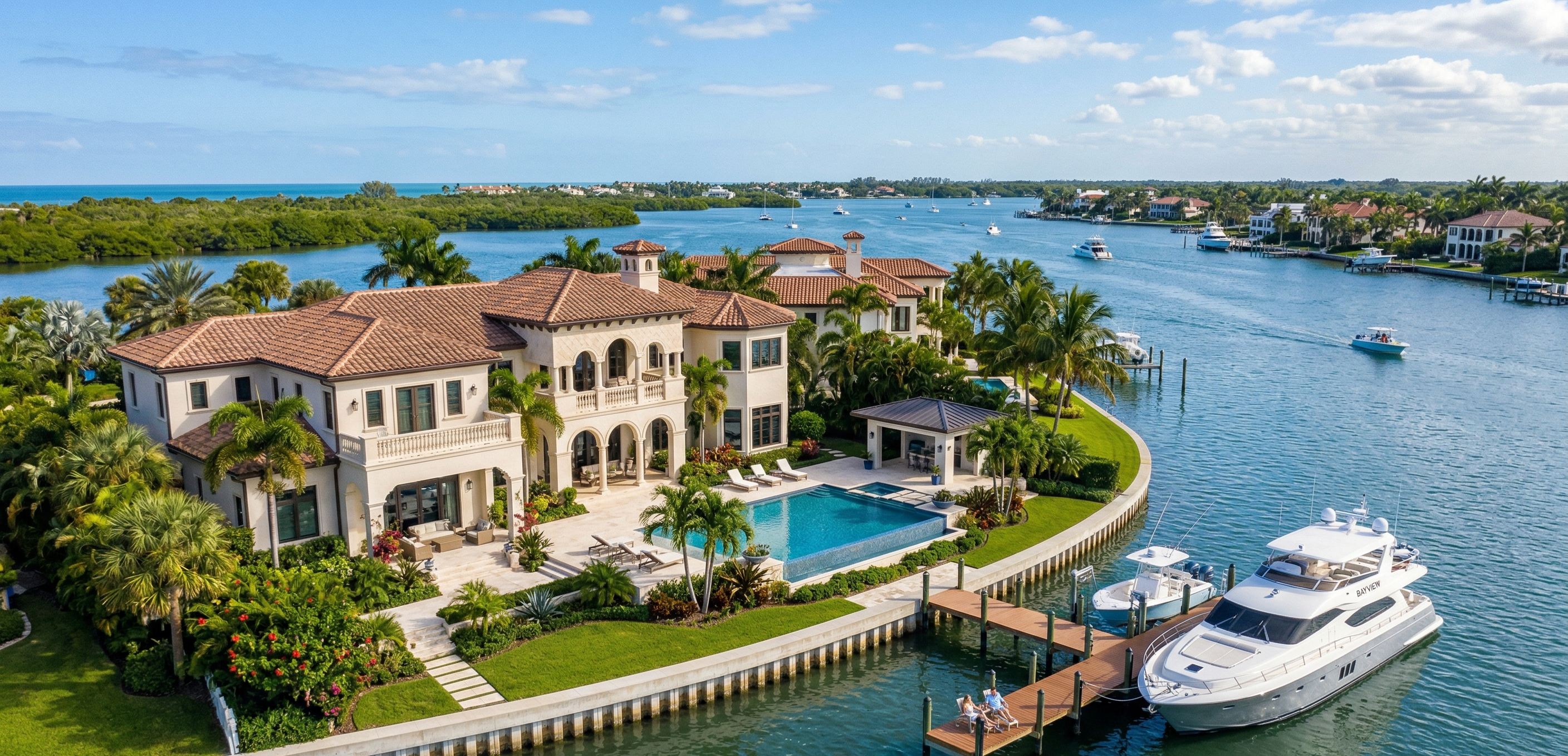
Coastal luxury estate outdoor area with open sightlines to Gulf of Mexico waterfront
Design language reference: coastal estate, Gulf Coast — Unsplash

The Defining Elements of Coastal Estate Outdoor Design

Clean Lines and Open Sightlines

Coastal estate design is organized around horizontal planes and unobstructed view corridors. The pool deck is low and level with the interior floor elevation where possible — a minimal threshold between inside and out. Shade structures use open-frame aluminum with horizontal lines and no solid overhead panels that block sky. Planting is low at the waterfront edge and rises in height as it moves away from the water — never a wall of planting that blocks the view from the pool zone or main living areas.

The color palette follows the same logic: white, cream, warm gray, natural stone tones, and the neutral tones of coastal sand and bleached wood. No competing color. The outdoor estate reads as calm — a deliberate reduction of visual complexity that allows the water to dominate.

Native Coastal Planting as the Design Foundation

The most effective planting strategy for a Naples waterfront estate is the one that requires the least accommodation: native coastal species. Sea Grape, Buttonwood, Sabal Palmetto, Muhly Grass, and Cocoplum evolved for this exact environment — salt spray, high humidity, storm load, and the challenging growing conditions at the transition zone between land and water. They require no special treatment that imported species do. They don't fail in storm conditions that damage non-native planting.

Native coastal planting is also the most appropriate aesthetic choice for coastal estate design. Sea Grape's broad waxy leaves, Muhly Grass's fine texture moving in the Gulf breeze, Sabal Palmetto's native permanence at 30–40 feet — these species produce a coastal landscape that looks like it belongs at the water's edge because it does.

Low-Maintenance as a Design Value

Many waterfront estates in Naples are second homes or seasonal residences. The most important design decision for this buyer profile is not aesthetic — it is the question of what happens to the estate when the owners are absent for four to six months. The correct answer is: nothing visible changes. The planting is on drip irrigation with smart controllers. The hardscape requires no seasonal treatment. The outdoor kitchen components are 316 stainless and require no winterization. The estate returns to residents in exactly the condition they left it.

SWFL-Specific Engineering for Waterfront Estates

Coastal estate design in SWFL is not a style preference — it is a technical discipline. Material selection on a waterfront property is an engineering decision. The following table reflects performance reality in salt-air, high-UV, and storm-load conditions.

Element Correct Specification Common Failure
Pool deck / hardscape 20mm rectified porcelain — no sealing, salt-stable, cool underfoot Standard pavers — require sealing every 2–3 years, salt infiltration degrades grout joints
Shade structure Marine-grade powder-coated aluminum — zero maintenance, 150+ mph wind-rated Wood pergola — 18 months in salt air before paint failure and structural deterioration begins
Outdoor kitchen 316 stainless all components, stone or porcelain counters, aluminum frame 304 stainless — corrodes visibly within 18 months in direct salt exposure
Fasteners and hardware 316 stainless or hot-dipped galvanized throughout Zinc-plated fasteners — fail within one season in coastal zone
Planting Native coastal species — Sea Grape, Buttonwood, Sabal, Cocoplum, Muhly Grass Non-coastal species placed at water edge — salt burn, wind damage after first tropical storm

"On a waterfront property, every material decision is a technical decision first and an aesthetic decision second. Wood pergolas look right for about eighteen months. After that, you are repainting every year or replacing. We stopped specifying standard wood for waterfront shade structures entirely — the correct answer is always marine-grade aluminum, and the aesthetic achieves the same clean coastal look without the maintenance commitment."

— Thomas Ferrara · Precision Landscaping & Design
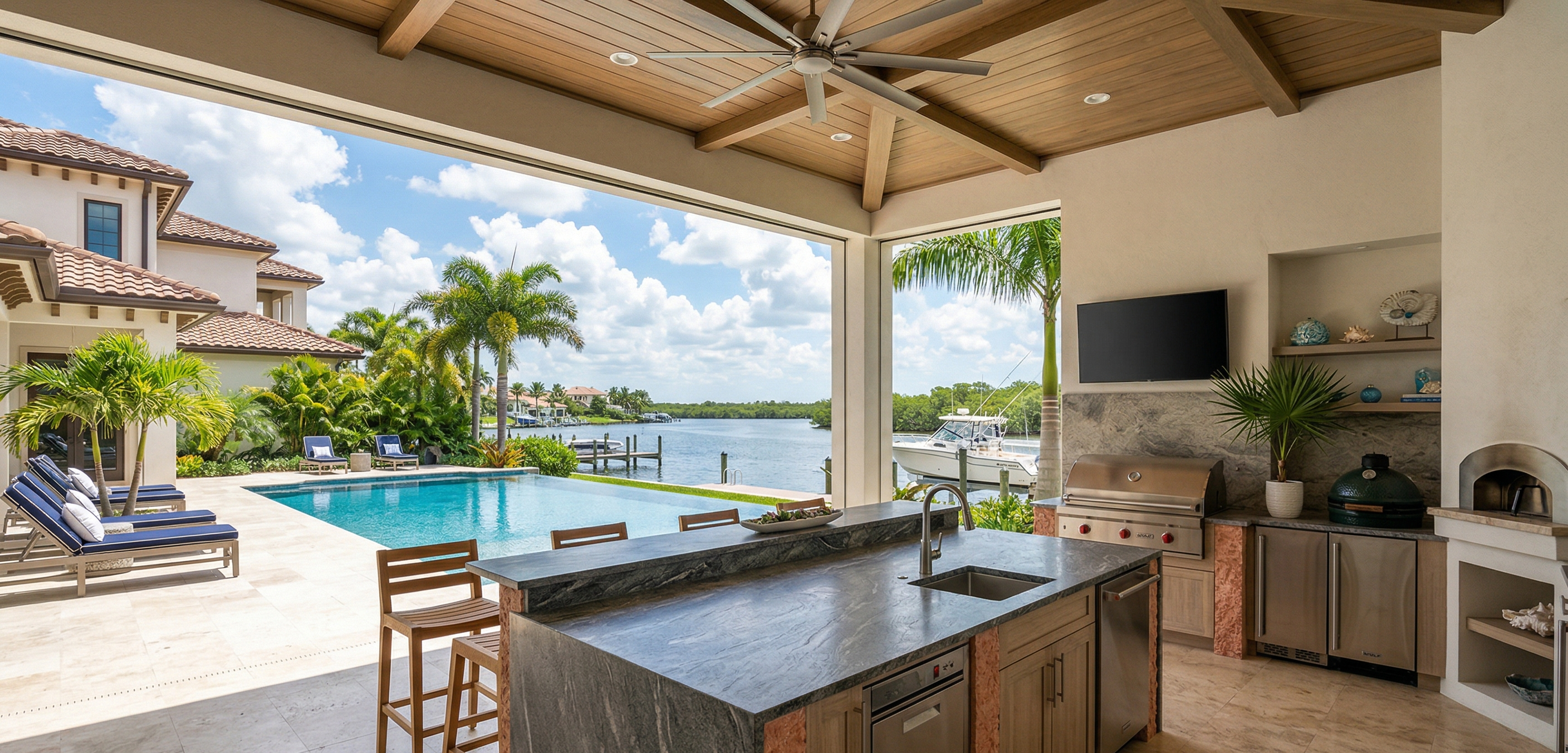
Coastal estate outdoor kitchen and pool deck with open pergola and waterfront view
Design language reference: coastal estate outdoor kitchen — Unsplash

Native Coastal Planting for Naples Waterfront Estates

Five native coastal species do the structural work in a coastal estate planting plan. Each is specified for a distinct function.

The Dock and Waterfront Zone — One Contract, One Firm

The most significant structural gap in how Naples waterfront properties are built is the separation between the outdoor estate contractor and the dock contractor. On most waterfront builds, these are separate firms with separate contracts, separate permits, and — critically — no design coordination between them. The result is a seawall cap detail that doesn't match the adjacent hardscape. A dock access path that wasn't included in the hardscape permit. An outdoor kitchen positioned with no relationship to the dock orientation. A waterfront estate assembled rather than designed.

Precision Landscaping & Design holds the GC license (FL CGC1539932) and coordinates dock and boat lift construction under the same contract as the outdoor estate build. This is not standard in the SWFL market. It means:

Naples waterfront estate dock and outdoor living area with native coastal planting
Design language reference: waterfront estate — Unsplash

Frequently Asked Questions

Coastal estate outdoor design is defined by clean horizontal lines, open sightlines that frame the water view, a neutral palette, native coastal planting (Sea Grape, Buttonwood, Sabal Palmetto, Muhly Grass, Cocoplum), low-maintenance as a design value, and aluminum pergola or shade structures that don't interrupt the view corridor. The design principle is that the water is the feature — everything else exists to frame it.
Porcelain pavers (20mm rectified) are the superior pool deck surface — no sealing required, salt-stable, and cool underfoot. Marine-grade powder-coated aluminum for all structural elements — pergolas, shade structures, outdoor kitchen frames. 316 stainless steel for all outdoor kitchen components and fasteners. Standard wood pergolas fail within 18 months in salt-air exposure. Standard 304 stainless corrodes visibly within 18 months in direct coastal zones.
The native coastal plant palette performs best because these species evolved for salt air, storm surge, and high wind: Sea Grape (best privacy and windbreak for Naples waterfront), Buttonwood (native coastal hedge, salt-tolerant), Sabal Palmetto (state palm, hurricane-resistant at 30–40 feet), Muhly Grass (fine texture, spectacular bloom, zero spray program), and Cocoplum (dense native hedge, no maintenance spray required).
Most outdoor contractors do not hold dock and seawall scope — it's typically a separate contract with a separate firm. Precision Landscaping & Design coordinates dock and boat lift construction under the same GC license (FL CGC1539932) as the outdoor estate build. One contract covers seawall cap design, dock access hardscape transition, outdoor kitchen orientation, and the dock structure — no handoff between firms at the water's edge.
Low-maintenance waterfront estates are designed from the material palette up: native coastal planting on drip irrigation with smart controllers, porcelain hardscape with no sealing requirement, aluminum structures with no repainting, 316 stainless outdoor kitchen components with no winterization. The estate should maintain itself beautifully for months without an owner present — and it will, when the correct specifications are made at the design stage.

Building a Waterfront Estate in Naples?

We design and build the full coastal outdoor estate — pool, hardscape, native planting, outdoor kitchen, and dock coordination — under one contract. One of the few SWFL contractors who holds GC + dock scope together. Precision Landscaping & Design · FL CGC1539932.

Or read: Dock & Boat Lift · Pool Design & Build · Design Languages Guide