NAPLES SITE WORK GUIDE · PRECISION LANDSCAPING & DESIGN
Clearing vs Grading
vs Site Work — Naples
Three names get used as if they are the same job. They are not. Here is what each actually includes on a Collier County lot — and the sequence that survives a wet season.
TL;DR — KEY TAKEAWAYS
Lot clearing vs land grading vs site work in Naples is a sequence question, not a vocabulary question. Clear the organics. Shape the ground. Then treat drainage and base as part of the same system — not a later add-on after the first storm.
- Lot clearing: Vegetation, debris, and access. Permit first (VRP). Leaves a working pad — not a finished yard.
- Land grading: Elevations, fall, and pads. Rough, fine, then finish. Water gets a designed path.
- Site work: The parent scope — clearing coordination, grade, drainage when the site requires it, and the base later trades sit on.
- Sequence that holds: Clear → rough grade → retain / drain → finish grade → surfaces. Reverse it and you cut through finished work.
- Split crews: A clearing company that leaves, then a grader who never saw the plan, is how East Naples-scale lots turn into seasonal mud.
Owners call looking for lot clearing vs land grading vs site work in Naples because three different trucks showed up with three different scopes — and nobody owned the water. Clearing is not grading. Grading is not “site work.” Site work is the system those two belong to.
On a flat Collier County lot the water table sits close to the surface and rain arrives in hours, not seasons. If you clear without a grade plan, you get a sand pad. If you grade without deciding where water goes, you get a pretty slope that still ponds at the house. If you hire those as separate contracts, you become the coordinator.
This guide is the distinction we use on the ground — including the East Naples lot clearing and land grading conversion, where ROW, grade, retention, and working beds had to land as one sequence.
Lot clearing vs land grading vs site work — side by side
Read the row that matches what you actually need. If you need two or more rows, you need Naples site work, not a single-trade crew.
| Question | Lot clearing | Land grading | Site work |
|---|---|---|---|
| What leaves the property | Vegetation, stumps, debris, sometimes legacy concrete | Almost nothing — dirt is moved, not hauled as the main job | Clearing plus any export/import the grade requires |
| What you have when it is done | Access and a raw pad | Designed elevations and fall | A lot that later trades can build on |
| Permits you usually hit | Collier VRP; often after the building permit on new construction | Tied to the site / building package | Clearing + grade + drainage as one package |
| Who should own water | Not this trade alone | This trade — if drainage is in the same drawing | This scope, by definition |
| Typical call when this is the only need | Overgrown acreage or a lot that cannot be accessed | Pad is clear but water still sits | New CO, raw exterior, or a full outdoor build starting from dirt |
What lot clearing actually includes in Naples
Lot clearing in Naples is access and organics — not finish grade. Street-edge growth gets opened for sightline. Interior growth comes out to a working sand pad. Material leaves the site under Collier disposal rules. Healthy canopy that belongs in the final layout stays when the plan says it stays.
The permit that trips people: a Vegetation Removal Permit before native vegetation comes down. On new construction, that VRP typically sits under the building permit — you do not “just send a crew.” Confirm the current path with Collier County building permits before anyone cuts.
If the next sentence after “we cleared it” is not a grade and water plan, you hired a clearing job. That is fine when it is all you needed. It is not fine when a garden, driveway, or pool terrace is coming next.
What land grading actually includes
Land grading is the shape of the lot. A land grading contractor in Naples sets rough elevations (pad height, primary fall), fine grades (basins, swales, drain runs), and finish grade (the last pass before sod, planting, or hardscape).
On Grey Oaks and Quail West scale lots — and on East Naples acreage — an inch of fall is not decoration. There is no natural hillside to bail you out. Finish grade that does not point water at a designed discharge will point it at the house, the pool equipment, or the first low spot in a paver field.
Grading without drainage specified is still a half-job when the site needs infrastructure. We do not pretend every lot needs a French drain. We do refuse to “grade it pretty” and hope the wet season agrees. See the Naples grading cost ranges when you are still in pre-construction.
What site work means — the parent scope
Site work is landscape construction under the dirt: clearing coordination, grade, drainage when the site requires it, and the compacted base that a pool terrace or motor court will sit on. It is not a synonym for “we knocked the trees down.”
If you are finishing a new house and the builder left raw ground, you are not shopping a clearing special. You are shopping site work that protects whatever gets built next. If you are converting overgrown acreage into working ground, same parent scope — the East Naples job was ROW, interior clear, grade, retention, then beds. One contract so the person who cut the pad also owned the water that pad would see in June.
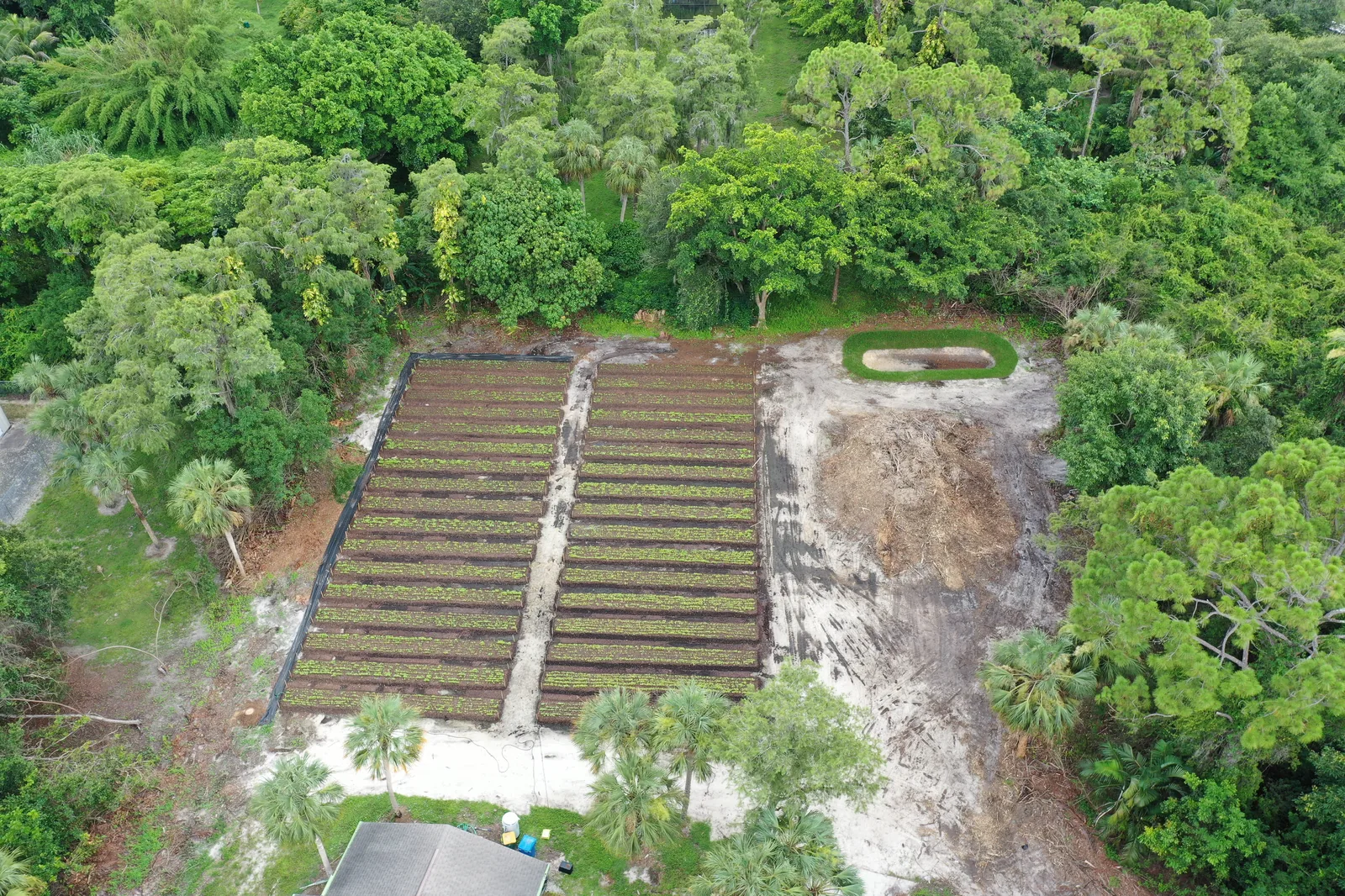
Clear without grade and retention, and the sand pad becomes a seasonal mud plane. Build beds before drainage is correct, and the first wet-season storm undoes the layout.
East Naples site conversion — sequence, not a slogan
The only sequence that survives a Collier wet season
- Permit and mark. VRP and building-permit status first. What stays, what goes.
- Clear for the plan. Access and organics. Not a stripped moonscape unless the drawing says so.
- Rough grade. Pad height and primary fall. Import fill where the water table demands it.
- Drain and retain when the site requires it. Basins, swales, French runs, or a retention feature cut into the pad — specified before hardscape.
- Finish grade. Last chance before surfaces. Then pavers, beds, or sod.
Pool shells and kitchen pads belong in that drawing set when those trades are in the project. Precision coordinates licensed pool contractors under one contract — we do not pretend the pool is an in-house crew. The grade still has to be ours to protect, or the terrace inherits someone else’s water. Full systems: Naples estate drainage.
What goes wrong when the trades are split
A clearing company finishes on a Friday. A grader who never saw the planting plan arrives on a Monday. A paver crew shows up after the first rain because “the dirt looks fine.” Each invoice is cheaper than a combined site-work package. The correction — cutting through finished surface to bury a drain — is not.
If your lot is still raw after the builder, start at site work, not at a plant list. If you only need the vegetation off so a surveyor can work, lot clearing is the honest scope. If the pad is already open and water is the problem, you are in grading — with drainage in the same conversation.
Frequently Asked Questions
Lot clearing removes vegetation and debris so the ground is accessible. Land grading shapes that ground — elevations, fall, and pads — so water has a designed path. Clearing without grade leaves a sand pad that becomes a wet-season mud plane. Grading without a proper clear means you are cutting around stumps and organics that will settle later.
Site work is the parent scope. It usually includes clearing coordination, rough through finish grade, drainage when the site requires it, and the base that later trades sit on. On a Collier County lot, site work is the system. Lot clearing and land grading are pieces of that system — not interchangeable job titles.
Collier County requires a Vegetation Removal Permit before clearing native vegetation. On new construction parcels, clearing typically cannot begin before the building permit is issued — the VRP is subordinate to that permit. Confirm current requirements with Collier County building permits before a crew mobilizes.
Before finishes are installed — and in the same drawing set as the pool terrace and kitchen pad when those trades are in the project. If the pool is excavated first with no grade or drainage plan, the hardscape inherits whatever water the shell did not take. Specify drainage and finish grade before pavers go down.
Pre-construction site-work packages on typical Collier County estate lots often land in the $25,000–$60,000 range before pool, hardscape, or kitchen trades begin. Waterfront and high water-table lots run higher because import fill and drainage get more complex. That is context, not a quote — lot size, organics, and discharge path set the number.
TALK TO THOMAS
Not sure which scope you are actually in?
If the lot is overgrown, raw after the builder, or holding water, a 15-minute call is faster than guessing which truck to hire. Thomas will tell you whether this is clearing, grading, or full site work — and whether it is a fit.
Call Thomas · (239) 300-8636 Tell Thomas about the lot