NAPLES HARDSCAPE GUIDE · PRECISION LANDSCAPING & DESIGN
Why Pavers Fail.
Southwest Florida.
The unit almost never fails. The base, the edge, the sand, or the water does — usually in the second wet season, after the punch list is signed.
TL;DR — KEY TAKEAWAYS
Why pavers fail in Southwest Florida is a base-and-water question. Sandy soil, a rising wet-season table, and no hillside to bail you out. A beautiful field on four inches of loose fill is a liability. The color name on the bid does not change that.
- Thin base: Units rock, then the field dishes. Depth and lifts are specified in the base-depth guide — this page is the symptom.
- No edge: The field creeps. Spike-in restraint pulled by mowers and traffic. Estate courts want a soldier course or concrete band.
- Washed sand: Joints open. Fire ants colonize. Polymeric sand is the SWFL joint spec.
- Water last: Paving over a grade problem conceals it until June. Drain the base, then set the field.
- The tell: A 5-year bid names the paver. A 25-year bid names the excavation, the lifts, the edge, and the discharge.
Owners search why pavers fail in Southwest Florida after the first rocking unit, or after a neighbor’s driveway started to wave. They do not have a material problem. They have a system that was never built for a flat Collier lot and a six-month rain season.
This is not a shopping guide. If you are still choosing the surface, start with pavers vs concrete driveway Naples. If you need the depth numbers, open the hardscape base depth guide. Here we name what you will see, what actually caused it, and how to read the next bid.
The four ways Naples pavers actually fail
A Naples hardscape contractor who has reset enough fields can sort a callback in one walk. Rocking units. A dish in the motor court. A field that has walked an inch toward the lawn. Joints full of ants. Those are four different jobs. Treating them as “the pavers went bad” is how the same bay fails twice.
| Failure | What you see | Actual cause | When it shows |
|---|---|---|---|
| Rocking / settlement | Units click underfoot. A tire leaves a dish. | Thin or uncompacted base. Organics under the field. | Year 2–4, after two wet seasons |
| Field creep | A gap at the house. Pavers in the turf. | Missing or pulled edge restraint | Year 1–3, first along the drive edge |
| Open joints / ants | Sand gone. Mounds at the joints. | Washed sand, not polymeric | First summer after install |
| Ponding / heave | Standing water. A hump after a storm. | No discharge. Water under the base. | First June–October |
Thin base and a rising water table
Naples soil is sandy and low-cohesion. It drains fast and bears poorly. A northern four-inch gravel habit does not transfer. We compact crushed limestone in lifts over a prepared subgrade, with geotextile where organics or clay pockets show up. Skip a lift, or set units on fill that was never compacted, and the wet-season table turns the base into a slurry. Units drop. The field waves.
Pelican Bay and Grey Oaks lots that look “already flat” are the ones that fool out-of-market crews. Flat is not drained. If the base cannot shed water, the surface will tell you in June. Exact depths by use — patio versus driveway — stay on the base-depth page. Do not let a bid “value-engineer” them.
Roots are the other quiet void. Canary Island date palms and live oaks next to a field will lift units if there is no root barrier and no setback. The failure looks like settlement. The cause is a living thing under the geotextile you never installed. Separate specimen trunks from the motor court in the planting plan — do not wait for the first rocking course at the trunk flare.
Edge restraint, washed sand, and fire ants
Every paver field needs a continuous edge. No exceptions. Spike-in commercial restraint works on straight residential runs if the spikes are actually in — every 12 inches, every 6 on a curve. Estate motor courts and anything a mower kisses should be a concrete soldier course or band. Pool edges are never spike-in. That rule is in the terrace guide; the principle is the same: if the edge lets go, the field walks.
Joints are the other quiet failure. Washed sand looks fine at punch list. One wet season later it is in the lake. Fire ants take the voids. Polymeric sand, activated after the edge is locked and the field is compacted, is the SWFL joint spec. It is not an upgrade line item. It is the joint. Activate it on the manufacturer clock — typically two wettings inside 24 hours — or you have paid for polymer and installed washed sand.
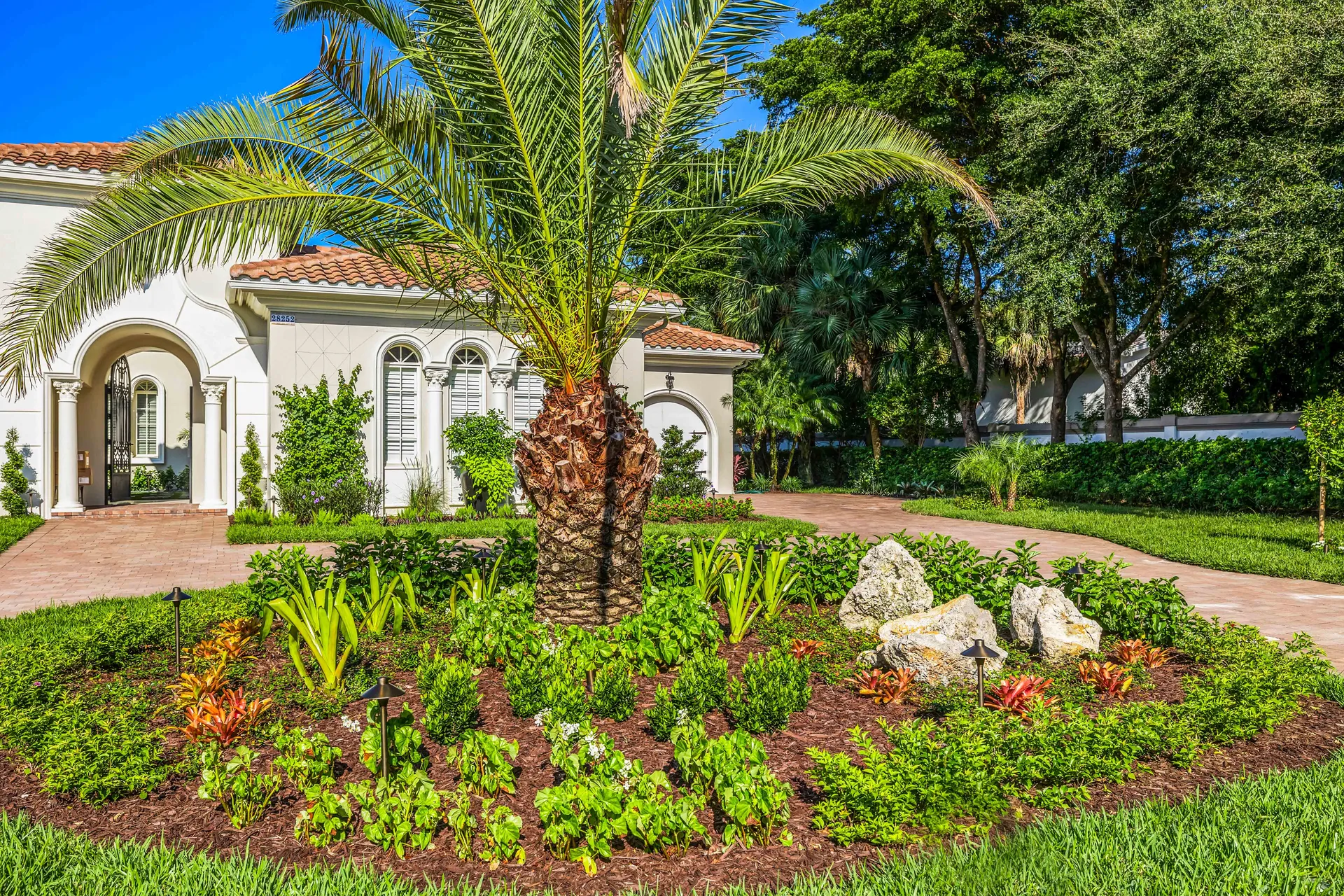
If the bid only names the paver color, you are not buying a driveway. You are buying a surface that will need a second bid.
How we read Collier County hardscape proposals
Water designed after the field is set
The most expensive failure is the one you cannot see until the pavers are down: water with no path. Grade the base — not the surface. You cannot add slope after the field is set without a tear-out. Preferred fall on a high-exposure court is a quarter inch per foot toward a designed discharge, not toward the garage or the lawn that already holds water.
We do not pretend every lot needs a French drain. We do refuse to pave a low spot and hope August agrees. When the site requires infrastructure, it is in the drawing before the first unit. Sequence lives with Naples estate drainage and with Collier County building permits when the work changes cover or ties into a wall over 24 inches.
A catch basin that sits an inch high is as useless as no basin. The grate has to be in the low point of the finished field, which means the base was graded to that point before the first unit. Setting the basin after the field is a retrofit. Water will find the old low spot and sit there, then work the joints, then the ants arrive. That sequence is predictable. It is also avoidable.
How to tell a 25-year bid from a 5-year one
Ask for five lines in writing: excavated depth, compacted base thickness and lifts, geotextile, edge type, joint sand, and discharge. The driveway pavers Naples install guide is the field checklist. If the contractor talks only about a sale on a particular unit, you already know which bid you are holding.
Settled pavers can be repaired without replacing the whole drive — that is why we specify a field instead of a slab. Repair without rebuilding the cause is a seasonal subscription. Open the units, rebuild the base, reset, re-sand. Anything less is a weekend.
Walk an existing field before you write a check. Rock a unit with your heel at the trash-truck radius and at the garage apron. Look for a gap opening at the house. Look for ant mounds in the joints. After rain, look for a puddle that was not there at punch list. One of those four tells you which row in the table you are in. Two or more usually means the base and the water were both skipped — a reset of the surface alone will not hold.
A lift-and-reset is a real job: units stacked by course, base rebuilt in compacted lifts, edge re-locked, polymeric sand activated. It is still less than a new poured slab and a less visible scar than a saw-cut patch. Compare that path to replacing a cracked plate in the pavers vs concrete driveway guide before you accept “we’ll just overlay it.”
Frequently Asked Questions
Pavers in Southwest Florida fail at the base, the edge, the joints, or the water path — almost never at the unit itself. Thin limerock, no geotextile over organics, spike-in restraint that pulls, washed sand that ants colonize, and a field paved before drainage is specified. The surface looks finished. The first June storm writes the review.
Sinking is voids under the field. Water moved fines out of a thin or uncompacted base, organics rotted under the geotextile that was never installed, or the subgrade was never compacted. Lifting the units without rebuilding the base is a cosmetic reset. The dish returns the next wet season.
Yes. Washed joint sand migrates in SWFL rain and leaves a highway for fire ants. Polymeric sand is the joint spec on every estate field we set — activated to the manufacturer timing after the edge is locked. It is not optional on a coastal or inland Collier lot.
If the system is interlocking pavers, yes — that is the point of the system versus a poured slab. Pull the units, rebuild the base to depth, reset, re-sand. If the original install had no edge restraint or no discharge path, repair the cause or the same bay fails again. Compare systems in the pavers vs concrete driveway guide.
The 5-year bid is silent on excavated depth, compacted lifts, geotextile, edge type, joint sand, and where water leaves. The 25-year bid names those items in writing. Depth numbers are in the hardscape base depth guide. If the bid only names the paver color, you are buying a surface, not a driveway.
TALK TO THOMAS
Already watching a field start to move?
If units rock, the court dishes, or a bid in front of you only names a color, a short call will tell you whether this is a reset or a rebuild. Thomas will say which — before anyone pulls a unit.
Call Thomas · (239) 300-8636 Tell Thomas About Your Project