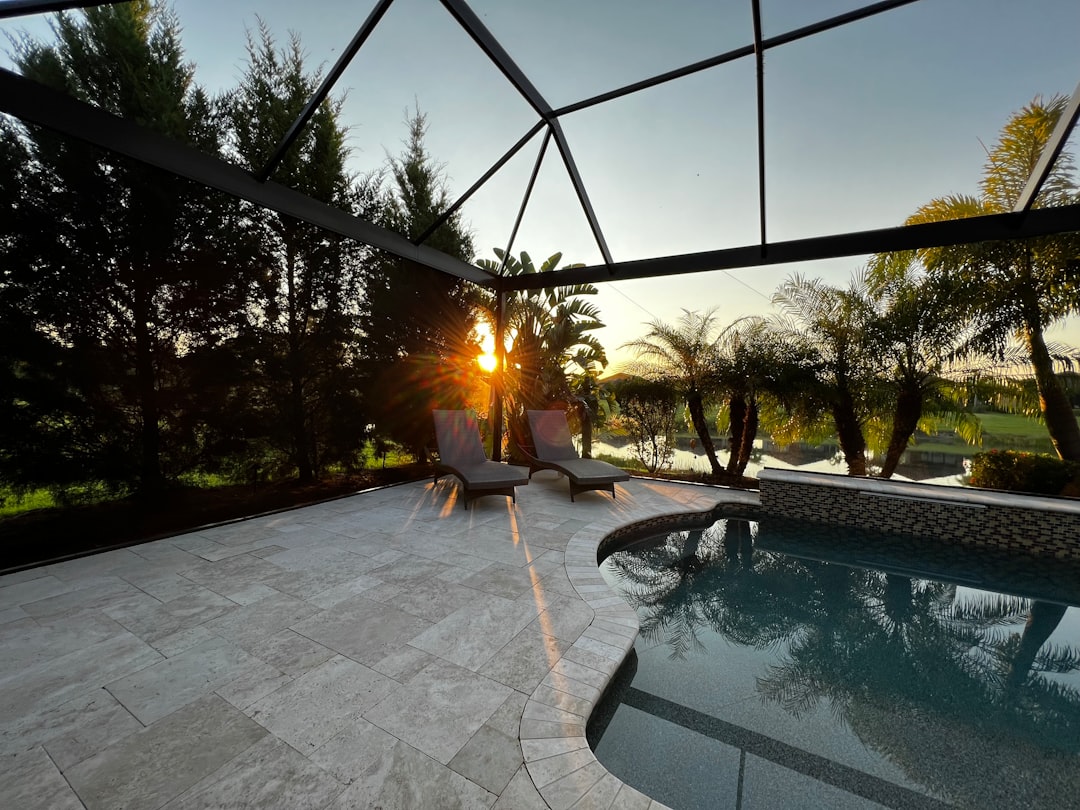
DESIGN METHODOLOGY · PRECISION LANDSCAPING & DESIGN
Why every estate we design starts with the bones — drainage, pool geometry, permit-ready hardscape, structural grades — and why the planting palette is always the final layer, not the organizing idea.
The methodology: Non-living elements — pool, deck, driveway, drainage, pergola, outdoor kitchen — are designed, permitted, and built before any planting is finalized. The structural layer comes first because it is irreversible.
Why drainage is first: Southwest Florida's flat topography and high water table require engineered drainage resolved at the site grading stage. Hardscape added later floods. Drainage added after hardscape is poured requires saw-cutting.
Pool coordination: Pool structural engineering, hardscape layout, and utility rough-in are designed together — not sequentially handed off between contractors. The pool coping detail, deck material, and drainage path are one decision, not three.
Planting as the final layer: Specimen positions, screening zones, and garden areas are defined in relation to the completed built environment. Planting completes the composition — it does not define it.
The upfront cost trade: Complete engineering and permitting before any visible work begins delays early progress and front-loads planning cost. It eliminates the most expensive outcomes: rework, change orders from sequencing conflicts, and misaligned contractor handoffs.
The standard approach to outdoor estate design in Naples starts with plants. The landscape designer visits the property, assesses the existing trees and site character, proposes a planting plan that defines the visual language of the outdoor environment, and then works backward to hardscape, pool, and drainage as constraints around the planting vision. It is an understandable sequence — plants are more legible to clients than drainage profiles, and a plant plan produces a visual output that feels like progress.
It is also the wrong sequence, and it produces preventable problems at every stage of construction. Drainage that conflicts with planned specimen tree positions. Pool structural engineering that runs into utility lines no one located before the plant plan was drawn. Hardscape grades that drain toward planting zones rather than away from them. Specimen plants installed before construction access is resolved, then destroyed when the concrete truck needs to get to the pool deck. Each of these is a real outcome. Each is the consequence of designing from the plants outward rather than from the bones inward.
Hardscape-first design reverses the sequence. The non-living elements — site grade, drainage, pool structural position, hardscape geometry, pergola footings, outdoor kitchen rough-in — are resolved before the first plant decision is made. Planting is then designed into a completed built environment: positioned where it will grow without conflicting with drainage, where it will read against the hardscape tones selected, where it will not be in the path of future equipment access.
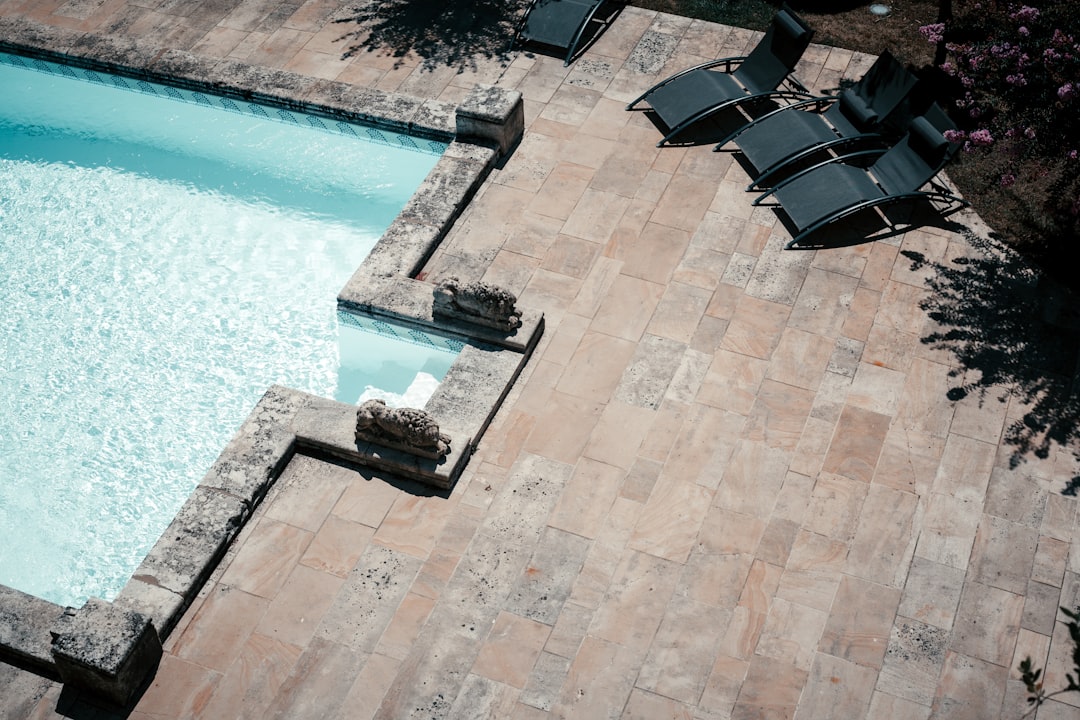
Southwest Florida presents a drainage engineering challenge that does not exist in most other luxury outdoor markets. The region is topographically flat — lot elevations in Naples vary by two to four feet at most — and the water table is high, particularly through the wet season. The same geology that produces the region's extraordinary real estate also means that water added to a site through rain has nowhere to go except slowly. An outdoor estate build that creates 4,000 to 8,000 square feet of impervious surface — pool deck, driveway, patio — concentrates rainfall over that area and must account for where it goes.
This is not a plumbing problem. It is a design constraint that affects every other decision on the site. Where the land grades to. Where hardscape joins planting zones. Where French drains are positioned relative to pool equipment and utility corridors. Whether a dry well system is feasible given the water table at that lot. Where a bioswale can be integrated without creating a standing-water zone adjacent to an outdoor seating area.
None of these decisions can be made optimally after the hardscape is designed. They must be resolved at the site analysis stage and embedded into the hardscape layout from the start. The drainage engineer, the hardscape designer, and the pool builder need to be looking at the same site plan before any of them produce a final drawing. This is one of the reasons single-contractor builds produce better outcomes than multi-contractor handoff builds: the drainage solution and the hardscape solution are developed by the same team at the same time, not inherited by one contractor from another.
"The most expensive call I get is from a client who says their outdoor area floods every rain event. Nine times out of ten, drainage was addressed as an add-on after the hardscape was designed — not as a design constraint before it. We go back in, saw-cut the deck, trench and install a French drain system, and repour. It costs three to five times what it would have cost if the drainage path was part of the original hardscape layout."
— Thomas Ferrara · Precision Landscaping & Design
Hardscape-first design is not simply a preference — it follows the logic of what can be built in what order, and what decisions are irreversible once made. The sequence below is how Precision Landscaping & Design approaches every estate build.
Topographic survey, water table assessment, existing utility locate, lot coverage calculation. Drainage path and stormwater management strategy established before any design work begins.
Pool placement, structural engineering, pool permit drawings. Pool position is coordinated with drainage path and hardscape layout — not sited independently and handed to another contractor.
Driveway, pool deck, patio, and walkway geometry finalized. Material selection, joint detail, and coping design coordinated with pool drawings. Drainage integration confirmed on hardscape permit set.
Pergola footings, outdoor kitchen rough-in (gas, electric, plumbing), irrigation mainline, low-voltage conduit. All underground infrastructure placed before any hardscape is poured.
Pool shell, pool deck, driveway, patios. This phase is the single longest active construction period and requires construction access — specimen planting is not on-site yet.
With the built environment complete, specimen tree positions are confirmed against actual hardscape sight lines. Screening zones respond to final privacy conditions. Planting completes what was built — it does not define it.
When the hardscape is the primary design decision rather than a supporting element, material selection carries more weight than it does in plant-led design. The wrong material choice is embedded in the estate for 20 to 30 years. The right one defines the visual tone of every other element — pool finish, pergola color, exterior paint selection, planting palette — that is built around it.
Tumbled or honed travertine in Ivory, Walnut, or Noce is the dominant estate hardscape material in Naples. Its warm cream tones work across Mediterranean, Coastal, and Transitional design languages. Travertine is porous — it requires sealing every two to three years in SWFL's humid climate — but its thermal performance (cooler underfoot than concrete in direct sun), its slip resistance when tumbled, and its visual warmth justify the maintenance commitment on luxury estates. Standard estate pool deck format: 16x24 or 18x24, laid in a pattern that integrates pool coping as a continuous surface extension.
Florida Shell Stone (fossilized coral limestone quarried in Florida) is the regional material for waterfront and coastal estates. It reads as belonging to the environment in a way that imported stone does not — the texture and tone connect to the coastal geology of Southwest Florida rather than the European sourcing of travertine. Shell Stone requires sealing and is more variable in surface character than travertine, which makes it appropriate for estates where the design language embraces natural variation rather than demanding visual consistency.
For contemporary estates, large-format porcelain (24x48 or 24x24, matte finish) provides the near-monolithic surface that modern outdoor design requires. It needs no sealing, is salt-stable, and performs better than concrete in SWFL's direct sun. The trade-off: it requires a precisely level substrate, is less forgiving of settling, and its clean geometry is incompatible with Mediterranean or Coastal design languages that depend on natural material variation for character.
In hardscape-first design, specimen planting decisions are made after the built environment is complete — or at minimum after it is fully designed and the spatial conditions are confirmed. This is not because planting is unimportant. It is because planting is the one element that can be adjusted, relocated, and evolved without structural consequences. A 14-foot Canary Island Date Palm relocated three feet east of its original position during installation costs one crane move. A pool deck drainage path changed after the concrete is poured costs two days of demolition, rework, and repour.
Specimen positioning in a hardscape-first project is a response to what has been built. Where is the sight line from the primary living area to the pool? Where does the hardscape surface create a visual endpoint that needs a specimen to anchor it? Where does the screening requirement emerge from the actual built privacy conditions — not from a theoretical plant plan drawn before construction began? These questions can only be answered correctly once the built environment is in place.
The result is not a planting plan subordinated to hardscape — it is a planting plan that is directly calibrated to the specific spatial conditions of the completed estate. The Canary Island Date Palm that anchors the right side of the pool terrace is positioned where it will read against the travertine surface behind it, shade the afternoon seating zone, and not interfere with the pool equipment access panel. That specificity is only achievable if the hardscape exists first.
Hardscape-first design is functionally impossible when the pool builder, hardscape contractor, landscape designer, and drainage engineer are operating as independent contractors under a homeowner-managed project. Each contractor optimizes for their own scope. The pool builder places the pool where it is easiest to build. The hardscape contractor designs the deck around the pool placement they inherit. The drainage engineer addresses what's left. The landscape designer works around the hardscape that resulted. The sequencing conflicts accumulate at every handoff.
General contractor delivery is the only structure in which hardscape-first design can be executed correctly. Precision Landscaping & Design holds FL GC license CGC1539932 and delivers the full outdoor estate scope — site work, pool, hardscape, pergola, outdoor kitchen, planting, and lighting — under a single contract. The drainage path and the pool position and the hardscape layout are developed by the same team at the same time. The specimen planting is installed after the team that built the hardscape confirms the position is correct. No handoff gaps. No sequencing conflicts.
"The design methodology is also the reason we only take on work as GC. You cannot build hardscape-first when you are the landscape subcontractor inheriting a pool and deck from another contractor. The decisions that make the estate work were already made — and usually made incorrectly for our scope. We need to be in the design process from the start, or we cannot guarantee the outcome."
— Thomas Ferrara · Precision Landscaping & Design
Precision Landscaping & Design delivers the full outdoor estate scope — drainage engineering, pool, hardscape, pergola, outdoor kitchen, and specimen planting — under one GC license and one contract. FL CGC1539932.
Or read: Hardscape & Pavers · Full Estate Build · Design Languages Guide