PLANNING GUIDE · PRECISION LANDSCAPING & DESIGN
Do I Need a
Landscape Designer?
What landscape designers and landscape architects actually do — and when the designer-builder relationship matters more than who you hire separately.
The Quick Answer
For multi-trade estate builds in Naples, a landscape designer is not optional — it's the difference between a coordinated outdoor environment and a collection of independently purchased components. Here's when you need one and what to look for.
- Multi-trade projects: Any build combining hardscape + planting + lighting + pool requires coordinated design. Without it, each trade defaults to their own standard — the result looks purchased separately, not designed together.
- Single-trade projects: Planting-only or simple paving projects may not require a full designer — but a contractor with deep specification knowledge still prevents costly errors.
- Permits required: Grading, drainage, or structural outdoor work in Florida requires stamped drawings from a licensed landscape architect (LA). A designer without a license cannot submit for permits.
- Design-build vs. separate: Hiring a designer separately, then bidding to contractors, creates a coordination gap the client has to manage. A design-build firm with embedded design capability removes that gap.
- Cost benchmark: On a $200k+ estate build, proper design fees are typically 8–15% of construction cost — and prevent change orders that commonly exceed the design fee on unplanned projects.
The question "do I need a landscape designer?" comes from a reasonable place: you have a sense of what you want, you've seen properties you like, and you're wondering if a designer is a necessary step or an expensive optional. From an installer's perspective, the honest answer depends almost entirely on whether your project involves multiple trades and how much coordination risk you're willing to carry yourself.
What a Landscape Designer Actually Does
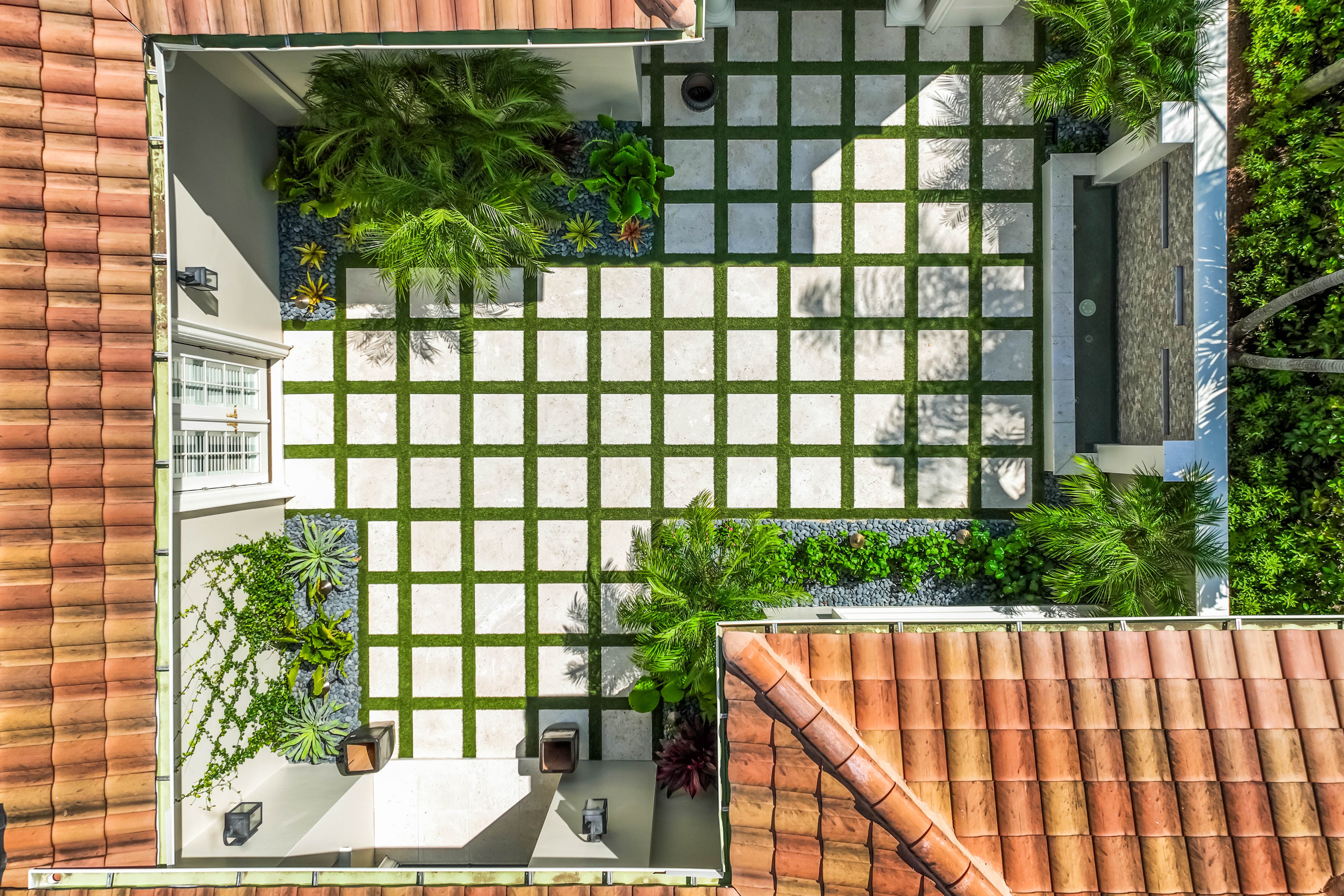
A landscape designer or landscape architect establishes the spatial logic for the entire outdoor environment before a single contractor mobilizes. On an estate build, that means:
Without this upstream work, each trade fills the coordination vacuum with their own defaults. The paving contractor sets grades that work for paving. The planting contractor places plants based on availability. The lighting contractor works around what's already in the ground. The result is a site that functions — but doesn't read as a designed whole.
Landscape Architect vs. Landscape Designer — The Distinction That Matters in Florida
In Florida, "landscape architect" is a licensed professional designation with a state-issued license and legal accountability for their work. A licensed landscape architect (LA) can stamp drawings for permit submission and takes on professional liability. A landscape designer does not hold a professional license and cannot stamp permit documents — their value is conceptual and visual, not technical or regulatory.
For most residential estate builds in Naples, the line is drawn at permitted work. If your project involves changes to grade that affect stormwater flow, retaining structures, or drainage systems that require municipal review, you need a licensed LA. For planting design, visual composition, and material selection on builds that don't require permit-stamped landscape drawings, a skilled designer — or a contractor with deep plant and material knowledge — may be sufficient.
"The question we hear often is whether they need to hire a designer before they call us. Our answer: call us first. On every project we take on, we work alongside our LA partner from day one — design and construction are one conversation, not a handoff. That structure works better than the alternative."
— Thomas Gow, Precision Landscaping & Design
The Case for Design-Build on Estate Projects
The traditional structure — hire a designer, get drawings, put the drawings out to bid — creates a coordination gap that persists through the entire build. The designer is no longer present when contractors make field decisions. Change orders happen without designer review. The client becomes the de facto project manager, translating between the designer's intent and the contractor's execution.
On a $150k–$400k estate outdoor build, this gap routinely produces $20k–$60k in change orders and revisions that would not have occurred with a unified design-build process. The design-build model — where the designer and builder work from the same information at the same time — reduces this risk significantly. Not because mistakes don't happen, but because the person who designed the solution is present when implementation decisions are made.
What to Ask Before You Hire
Whether you're interviewing a standalone designer or a design-build firm, these questions surface the critical information:
Common Questions
For multi-trade outdoor builds in Naples — projects involving hardscape, planting, lighting, pool, and site work — a landscape designer is not optional. Without coordinated design, each contractor makes independent decisions about grades, drainage, species, and visual flow. The result is components that look purchased separately. On single-trade projects (planting only, or simple paving), a designer adds less value — but specification expertise still prevents errors that cost more to fix than to get right initially.
A licensed landscape architect (LA) holds a state-issued Florida license, can stamp drawings for permit submission, and carries professional liability. A landscape designer does not hold a professional license and cannot stamp permit documents — their role is visual and conceptual. In Florida, any project requiring permitted drawings (grading, drainage structures) requires a licensed LA. For planting design and material selection on most estate builds without permit-required work, a skilled designer may be sufficient.
It depends on the contractor. Design-build contractors with a licensed LA on their team or embedded as a partner handle design and construction as a unified process — the most efficient structure for estate-scale builds. The alternative (designer separately, then out to bid) creates a coordination gap the client manages. For complex SWFL estate builds, a design-build firm with embedded design capability is typically the lower-risk structure.
Any build involving more than one trade benefits from coordinated design. The threshold for a licensed landscape architect in Florida is generally when permitted drawings are needed — grading, drainage, or structures. As a practical rule: if you're spending more than $50,000 on your outdoor build, proper design fees are a small fraction of what coordination errors and change orders will cost without it.
We work alongside our LA partner from the first site visit on every project. Design and construction are a single conversation — not sequential phases with a handoff. For conceptual design, we use Morpholio and UVision 3D for early-stage visualization before drawings are finalized. Our LA partner produces permitted drawings on all projects that require municipal review. Thomas is present through design, permitting, and installation — one point of contact from raw ground to finished estate.
Discuss Your Estate
Plans with Thomas.
We work alongside our licensed LA partner from the first site visit — design, permits, and construction as one conversation. If you have a project in Naples or Collier County and want to understand what a coordinated outdoor build looks like, start here. Licensed General Contractor · FL CGC1539932 · Licensed Landscape Contractor.
Or read: Our Landscape Design Service · Full Estate Build · Our Process